
Linux Foundation CKS: The Undeniable Edge in Kubernetes Security
The Certified Kubernetes Security Specialist (CKS) from the Linux Foundation stands as a pivotal credential for professionals committed to securing containerized environments. This advanced certification is meticulously designed to validate the critical skills required to defend Kubernetes clusters against sophisticated threats and ensure robust security practices. Candidates who pursue the Linux Foundation CKS are typically experienced Kubernetes administrators and security professionals aiming to deepen their expertise in mitigating vulnerabilities across the entire cloud-native stack. This comprehensive article delves into the indispensable advantages of holding the CKS certification, detailing its structure, syllabus, benefits, and strategic preparation pathways, ultimately clarifying the profound impact it can have on a cybersecurity career.
Understanding the Linux Foundation CKS Certification: A Foundation for Kubernetes Security Excellence
The Linux Foundation CKS certification offers a definitive benchmark for Kubernetes security proficiency. It focuses on practical, hands-on skills in securing container-based applications and Kubernetes platforms during build, deployment, and runtime. Earning this credential signifies an individual's ability to implement security best practices and respond to potential threats within a Kubernetes ecosystem, distinguishing them in a competitive landscape increasingly reliant on secure cloud-native operations. This certification is crucial for those tasked with safeguarding critical infrastructure.
Validated Expertise for Today's Cyber Threats
In an era where cyber threats are constantly evolving, especially within dynamic container environments, the CKS ensures that certified professionals are equipped with the most current knowledge and tools. It covers a broad spectrum of security domains, from hardening cluster components to minimizing microservice vulnerabilities, preparing specialists to tackle real-world security challenges. The practical, performance-based exam format means that candidates must not only understand theoretical concepts but also demonstrate their ability to apply them effectively under pressure. This practical validation is what sets the Linux Foundation CKS apart, proving competence rather than just recall.
Examining the Certified Kubernetes Security Specialist Structure
The Certified Kubernetes Security Specialist exam, identified by the code CKS, is a rigorous, performance-based test designed to challenge and validate the practical security skills of Kubernetes professionals. Understanding its format is crucial for effective preparation.
The key details of the examination are:
-
Exam Name: Certified Kubernetes Security Specialist
-
Exam Code: CKS
-
Exam Price: $445 USD
-
Duration: 120 minutes
-
Number of Questions: 15-20 performance-based tasks
-
Passing Score: 67%
This structure emphasizes hands-on proficiency, requiring candidates to solve security-related problems directly within a live Kubernetes environment. The limited time and complex scenarios demand both deep knowledge and efficient problem-solving skills, mirroring the rapid response often needed in real-world security incidents. Such an assessment ensures that certified individuals possess immediately applicable expertise, making the CKS highly valued by employers seeking practical security specialists.
Deep Dive into CKS Exam Objectives: Securing Kubernetes Across the Stack
The Linux Foundation CKS syllabus is meticulously structured to cover the most critical areas of Kubernetes security, ensuring a holistic understanding of how to protect cloud-native environments. Each domain carries a specific weight, guiding candidates on where to focus their study efforts to achieve a passing score of 67%. Mastering these areas demonstrates a comprehensive capability to secure Kubernetes clusters effectively.
Securing Core Cluster Components and System Hardening
The initial segments of the exam focus on foundational security principles for Kubernetes clusters and the underlying systems.
-
Cluster Setup (15%): This domain assesses a candidate's ability to establish a secure Kubernetes cluster from the ground up. It includes tasks like ensuring network security, configuring secure API server access, and managing etcd security. Proper initial setup is paramount to prevent vulnerabilities from the outset.
-
Cluster Hardening (15%): Building on the setup, this section evaluates skills in strengthening existing cluster configurations. Topics encompass limiting access to Kubernetes resources, securing kubelet, applying admission controllers for policy enforcement, and regularly auditing cluster components for misconfigurations.
-
System Hardening (10%): Beyond Kubernetes itself, candidates must understand how to secure the host operating systems running cluster components. This includes concepts such as restricting host process privileges, implementing kernel hardening (e.g., AppArmor, seccomp), and managing trusted registries for container images.
These early topics lay the groundwork for comprehensive security, emphasizing that a secure Kubernetes environment starts with a robust foundation.
Minimizing Microservice Vulnerabilities and Supply Chain Security
As applications become increasingly distributed, securing individual microservices and their deployment pipeline becomes crucial.
-
Minimize Microservice Vulnerabilities (20%): This significant portion of the exam focuses on application-level security within Kubernetes. It covers techniques for securing application deployments, like defining network policies to restrict pod communication, implementing secure inter-pod communication, and managing secrets effectively. Candidates must demonstrate an understanding of how to prevent common application exploits within containers.
-
Supply Chain Security (20%): Protecting the integrity of the software supply chain is critical in preventing malicious code from reaching production. This domain tests knowledge of securing the build process, ensuring image authenticity through digital signatures, and scanning images for known vulnerabilities before deployment. It underscores the importance of a trusted source for all deployed artifacts, a growing concern in modern software development.
These sections highlight the need for vigilance throughout the application lifecycle, from development to deployment.
Monitoring, Logging, and Runtime Security
Effective security requires continuous oversight and the ability to detect and respond to threats in real time.
-
Monitoring, Logging and Runtime Security (20%): This final domain emphasizes the operational aspects of Kubernetes security. It includes configuring robust logging and auditing mechanisms to track cluster activities, implementing runtime security tools (e.g., Falco, OPA Gatekeeper) to detect and prevent anomalous behavior, and setting up alerts for security incidents. The ability to monitor, analyze, and respond quickly is vital for maintaining a secure operational posture.
Together, these syllabus topics ensure that a CKS certified professional is capable of implementing, monitoring, and maintaining a secure Kubernetes environment, providing invaluable security expertise from setup to ongoing operations.
Why Pursue the Linux Foundation CKS? Elevating Your Cloud-Native Profile
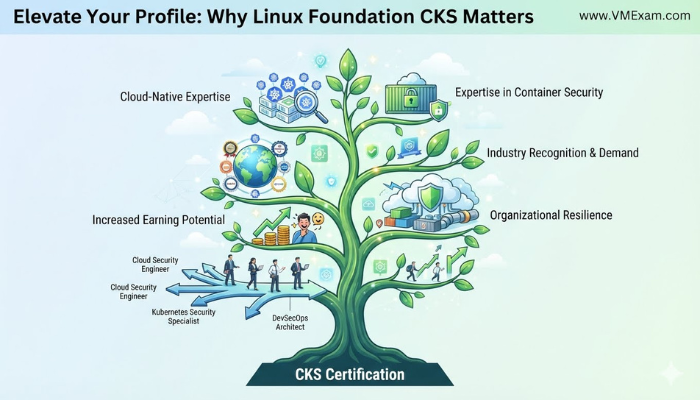
The Linux Foundation CKS certification isn't just another credential; it's a strategic investment in a highly sought-after skill set. As organizations increasingly adopt Kubernetes, the demand for specialists capable of securing these complex environments is skyrocketing. Holding the CKS demonstrates a proactive approach to professional development, aligning skills with critical industry needs. It signals to employers that an individual possesses validated, hands-on expertise in one of the most vital aspects of cloud-native infrastructure.
Enhanced Career Opportunities and Earning Potential
Achieving the CKS can significantly open doors to advanced roles such as Kubernetes Security Engineer, Cloud Security Architect, or DevOps Security Specialist. These positions often come with increased responsibilities and, consequently, higher earning potential. Employers are willing to invest in professionals who can demonstrably protect their cloud-native assets, making CKS holders highly competitive. The certification provides a tangible way to differentiate oneself in a crowded tech landscape, offering a clear pathway for career advancement within the rapidly expanding cloud and container security domains.
Contributing to Organizational Resilience
Beyond individual career growth, CKS certified professionals directly contribute to the resilience and security posture of their organizations. By implementing robust security measures, they help prevent costly data breaches, ensure compliance with regulatory standards, and safeguard intellectual property. Their expertise translates into tangible business value, reducing operational risks associated with insecure deployments. This makes the CKS a crucial asset for any enterprise leveraging Kubernetes, reinforcing the importance of a strong security foundation.
Architecting a Robust CKS Exam Preparation Strategy
Effective preparation for the Linux Foundation CKS exam requires a structured and hands-on approach, given its performance-based nature. Simply memorizing concepts will not suffice; candidates must be able to execute security tasks proficiently in a live environment. A well-planned strategy integrates theoretical knowledge with extensive practical application. This ensures not only passing the exam but also building a deep, functional understanding of Kubernetes security.
Mastering Core Concepts and Foundational Knowledge
Before diving into security specifics, a solid grasp of Kubernetes fundamentals is essential. The CKS builds upon the Certified Kubernetes Administrator (CKA) knowledge, so reviewing CKA topics, especially around cluster architecture, networking, and deployment, can be highly beneficial. Focus on core Kubernetes security primitives, such as Role-Based Access Control (RBAC), network policies, and Pod Security Standards (PSS). Understanding how these components interact is fundamental to implementing effective security measures, providing a strong base for advanced topics.
Hands-on Practice is Key for Success
The CKS is a practical exam, meaning hands-on experience is paramount. Set up your own Kubernetes clusters (e.g., using Minikube, K3s, or cloud-based managed services) and practice implementing every item on the syllabus.
-
Scenario-Based Drills: Work through common security scenarios, such as hardening the API server, deploying secure images, and configuring runtime security tools like Falco.
-
Troubleshooting Exercises: Practice identifying and remediating vulnerabilities. This includes recognizing misconfigurations in YAML files, debugging network policy issues, and understanding audit logs.
-
Command-Line Proficiency: Become highly adept with
kubectland other command-line tools necessary for managing and securing Kubernetes resources. Speed and accuracy are critical during the timed exam.
Consistent practice in a realistic environment will build the muscle memory and problem-solving skills needed to pass the exam.
Leveraging Study Resources and Practice Exams
Numerous resources can aid your preparation. The official Linux Foundation CKS curriculum provides a comprehensive guide to the exam objectives. Consider reputable online courses that offer practical labs and in-depth explanations. Participating in study groups can also provide valuable insights and peer support. Additionally, taking CKS practice exam questions is an indispensable step. These simulated exams help familiarize you with the exam environment, question format, and time constraints, allowing you to identify areas needing further attention and refine your exam-taking strategy.
Overcoming Challenges in Kubernetes Security: CKS Perspectives
Kubernetes, while powerful, introduces a unique set of security challenges due to its distributed nature, dynamic workloads, and reliance on various open-source components. The Linux Foundation CKS directly addresses these complexities, equipping professionals with the knowledge to navigate and overcome them. From securing a sprawling microservices architecture to defending against supply chain attacks, the certification provides a structured approach to solving real-world security dilemmas that organizations face daily.
Addressing Dynamic Workloads and Ephemeral Environments
One significant challenge is securing dynamic and ephemeral workloads. Containers are constantly created, destroyed, and scaled, making traditional security models insufficient. CKS-certified individuals learn to implement runtime security tools and policies that adapt to these changes, ensuring continuous protection regardless of workload lifecycle. They understand how to configure effective auditing and logging to maintain visibility into rapidly changing environments, a crucial skill for modern security operations.
Mitigating Supply Chain Risks
The increasing reliance on third-party container images and open-source components has amplified supply chain risks. Malicious images or compromised dependencies can introduce severe vulnerabilities. The CKS syllabus covers strategies for vetting images, enforcing image signing, and using vulnerability scanning tools as integral parts of the CI/CD pipeline. This expertise is vital for preventing the introduction of compromised software into production, protecting an organization from potentially devastating breaches originating upstream.
The Linux Foundation CKS and Career Trajectory: Unlocking Advanced Roles
For many IT professionals, the Linux Foundation CKS represents a significant leap forward in their career trajectory, positioning them for specialized and highly compensated roles. The certification acts as a powerful differentiator, signaling advanced capabilities in a niche yet critical domain. It demonstrates not just theoretical understanding, but a proven ability to apply security principles in complex, real-world Kubernetes environments, making CKS holders indispensable.
Pathways to Specialized Security Engineering
CKS certification often serves as a springboard into dedicated Kubernetes security engineering roles. These positions involve designing, implementing, and managing security solutions specifically tailored for container orchestration platforms. Professionals in these roles are responsible for ensuring compliance, conducting security audits, and developing threat models unique to cloud-native applications. The practical skills validated by the CKS are directly applicable to these high-impact responsibilities, accelerating career progression towards senior and lead security engineering positions. Moreover, the CKS credential aligns well with organizations actively collaborating with the Linux Foundation's project partnerships, showcasing a commitment to industry best practices.
Impact on DevOps and Cloud Security Architect Roles
The CKS also profoundly impacts roles within DevOps and Cloud Security Architecture. In DevOps, a CKS-certified professional can integrate security practices earlier into the development lifecycle (SecDevOps), automating security checks and promoting a security-first culture. For Cloud Security Architects, the CKS provides the deep Kubernetes-specific knowledge needed to design secure cloud-native infrastructures, ensuring that applications deployed on platforms like AWS EKS, Google GKE, or Azure AKS are inherently resilient to attack. This dual impact makes the CKS a versatile and highly valuable certification across multiple critical IT functions.
Maintaining Security Posture Post-Certification: Continuous Learning
Earning the Linux Foundation CKS is a remarkable achievement, but the journey of a security professional doesn't end there. The landscape of Kubernetes and cloud-native security is constantly evolving, with new vulnerabilities, tools, and best practices emerging regularly. Maintaining a strong security posture post-certification requires a commitment to continuous learning and adaptation, ensuring that the validated skills remain sharp and relevant in the face of new threats.
Staying Ahead of Emerging Threats and Technologies
Certified professionals must actively engage with the cloud-native security community, follow industry news, and participate in ongoing training. This includes keeping up-to-date with new CVEs (Common Vulnerabilities and Exposures) related to Kubernetes and container runtimes, as well as understanding advancements in security tools and methodologies. Regular review of official Kubernetes documentation and security advisories from the Linux Foundation and CNCF is also crucial. This proactive approach ensures that the CKS credential remains a testament to current, cutting-edge expertise, rather than a static achievement.
Implementing Security Operations and Automation
Post-certification, the focus shifts to operationalizing security within an organization. This involves implementing automated security checks in CI/CD pipelines, integrating security into incident response plans, and continuously auditing the security configuration of clusters. CKS holders are well-positioned to lead these efforts, leveraging their deep understanding to build resilient and self-healing security systems. They can champion the adoption of security-as-code principles, embedding security directly into infrastructure definitions and deployment processes, ensuring that security is not an afterthought but an intrinsic part of cloud-native operations.
Evaluating Your Readiness for the Certified Kubernetes Security Specialist Exam
Before committing to the Linux Foundation CKS exam, it's prudent for candidates to accurately assess their current skills and experience. The CKS is an advanced certification that assumes a foundational understanding of Kubernetes administration. A clear evaluation of readiness ensures that preparation efforts are efficient and targeted, maximizing the chances of success on this challenging, performance-based exam. This assessment should cover both theoretical knowledge and practical hands-on capability.
Prerequisites for the CKS Certification
While there are no strict formal prerequisites for taking the CKS exam, the Linux Foundation strongly recommends that candidates possess a valid Certified Kubernetes Administrator (CKA) certification. The CKA establishes the fundamental knowledge of Kubernetes cluster management that the CKS builds upon. Without this foundational understanding, the advanced security topics and practical tasks of the CKS exam will be significantly more challenging. Candidates should also have a strong working knowledge of Linux operating systems, networking, and general security concepts.
Self-Assessment and Gap Analysis
A thorough self-assessment against the CKS syllabus is crucial. Go through each topic and honestly evaluate your proficiency. Can you not only describe the concept but also implement it practically? For areas where you feel less confident, identify them as knowledge gaps to address in your study plan. Consider taking a CKA practice exam if you haven't taken the CKA itself, to gauge your foundational Kubernetes skills. This structured approach helps in building a personalized study roadmap, focusing time and energy on the areas that require the most improvement, ensuring a well-rounded and effective preparation.
Official Resources and Training Pathways for CKS Success
Embarking on the journey to become a Certified Kubernetes Security Specialist requires access to high-quality, reliable learning resources. The Linux Foundation, as the vendor, provides official pathways and documentation that are invaluable for thorough preparation. Leveraging these official resources not only ensures alignment with the exam objectives but also provides a deep, authoritative understanding of Kubernetes security best practices. These pathways are designed to equip candidates with the practical skills needed for the exam and for real-world application.
The Linux Foundation's Official Training Offerings
The Linux Foundation offers dedicated training courses specifically tailored for the CKS certification. These courses, often structured with extensive labs and expert instructors, delve deep into the exam syllabus topics. They provide hands-on experience in a guided environment, which is crucial for a performance-based exam. While not mandatory, enrolling in an official training course can significantly streamline the learning process, offering structured content, practice scenarios, and opportunities to clarify complex concepts directly with experienced professionals. These courses are regularly updated to reflect the latest Kubernetes versions and security practices.
Leveraging Official Documentation and Community Support
Beyond structured courses, the official Kubernetes documentation is an indispensable resource. It provides comprehensive information on all aspects of Kubernetes, including its security features, RBAC configuration, network policies, and API server security. Regular review of the official CKS curriculum and exam tips provided by the Linux Foundation can also offer strategic advantages. Furthermore, engaging with the wider Kubernetes and cloud-native security community through forums, GitHub repositories, and special interest groups (SIGs) can provide additional learning opportunities and insights into real-world security challenges. These collective resources form a powerful toolkit for comprehensive preparation.
In conclusion, the Linux Foundation CKS certification represents an undeniable edge in the competitive field of cloud-native security. It goes beyond theoretical knowledge, rigorously validating a professional's ability to implement robust security measures within complex Kubernetes environments. For individuals, it unlocks advanced career opportunities, increased earning potential, and positions them as critical assets in safeguarding modern infrastructure. For organizations, CKS-certified professionals are vital for building resilient, secure, and compliant cloud-native operations. Pursuing and achieving this credential is not merely about passing an exam; it is about embracing a commitment to excellence in Kubernetes security, future-proofing skills, and contributing meaningfully to the secure evolution of digital landscapes.
Embrace the challenge of the CKS to solidify your expertise and elevate your career. Equip yourself with the knowledge and hands-on skills necessary to become a leader in Kubernetes security by exploring detailed study guides and practice opportunities available at Kubernetes security study resources. Your journey to becoming a Certified Kubernetes Security Specialist begins now, promising a future of profound impact and professional growth.
FAQs
1. What does the Linux Foundation CKS certification validate?
The Linux Foundation CKS (Certified Kubernetes Security Specialist) certification validates a professional's ability to secure container-based applications and Kubernetes platforms against common threats during build, deployment, and runtime, demonstrating practical skills in mitigating vulnerabilities.
2. Is the CKA certification a prerequisite for the CKS exam?
While not a strict formal prerequisite, the Linux Foundation strongly recommends holding a valid Certified Kubernetes Administrator (CKA) certification before attempting the CKS. The CKA provides the foundational Kubernetes knowledge that the CKS builds upon.
3. How long is the Linux Foundation CKS exam, and what is the passing score?
The Linux Foundation CKS exam has a duration of 120 minutes. It is a performance-based test, and candidates must achieve a minimum score of 67% to pass the certification.
4. What types of job roles benefit most from a CKS certification?
Job roles that benefit most include Kubernetes Security Engineers, Cloud Security Architects, DevOps Security Specialists, and professionals responsible for securing cloud-native applications and infrastructure. The certification enhances credibility and opens doors to advanced specialized positions.
5. What kind of preparation is most effective for the CKS exam?
The most effective preparation for the CKS exam involves a combination of theoretical study and extensive hands-on practice. Candidates should set up personal Kubernetes clusters, work through scenario-based security tasks, and utilize official study guides and practice exams to build proficiency.
- Linux Foundation Cloud & Containers Certification |
- CKS Kubernetes Security Specialist |
- CKS Mock Test |
- CKS Practice Exam |
- CKS Prep Guide |
- CKS Questions |
- CKS Simulation Questions |
- CKS |
- Certified Kubernetes Security Specialist (CKS) Questions and Answers |
- Kubernetes Security Specialist Online Test |
- Kubernetes Security Specialist Mock Test |
- Linux Foundation CKS Study Guide |
- Linux Foundation Kubernetes Security Specialist Exam Questions |
- Linux Foundation Kubernetes Security Specialist Cert Guide |
- Kubernetes Security Specialist Certification Mock Test |
- Kubernetes Security Specialist Simulator |
- Kubernetes Security Specialist Mock Exam |
- Linux Foundation Kubernetes Security Specialist Questions |
- Kubernetes Security Specialist |
- CKS Books |
- CKS Exam Cost |
- CKS Passing Score |
- CKS Syllabus |
- Kubernetes Security Specialist Exam Prep Guide |
- Kubernetes Security Specialist Study Guide |
- Linux Foundation Kubernetes Security Specialist Certification |
- Kubernetes Security Specialist Certification Sample Questions


