
The Demand for HashiCorp Certified Terraform Associate is Exploding
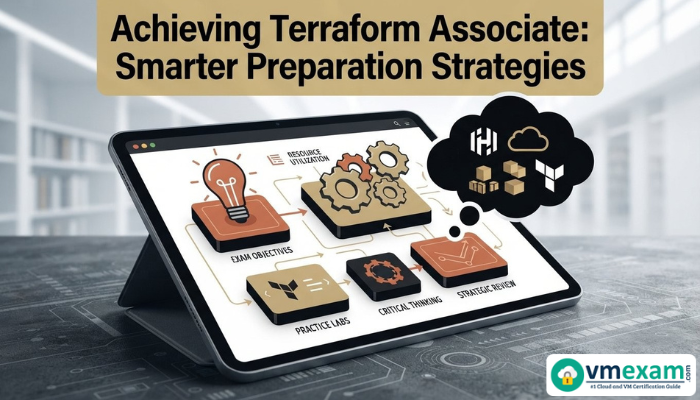
The HashiCorp Certified Terraform Associate certification serves as a foundational benchmark for individuals managing infrastructure as code (IaC) with Terraform. This crucial credential from HashiCorp validates a candidate's understanding of core Terraform concepts, its primary use cases, and how to effectively apply it for provisioning and managing cloud infrastructure. This article explores the rising significance of this certification, the opportunities it unlocks, and provides essential insights for those looking to excel in the rapidly evolving world of infrastructure automation. Professionals seeking to demonstrate their proficiency in modern cloud infrastructure practices will find this certification particularly valuable, positioning them for success in diverse technical roles.
Empowering Infrastructure with Terraform Expertise
In today's cloud-centric IT landscape, manual infrastructure provisioning is increasingly impractical and error-prone. Organizations are rapidly adopting Infrastructure as Code (IaC) principles to automate and manage their cloud environments efficiently and at scale. Terraform, developed by HashiCorp, stands out as a leading IaC tool, offering a declarative approach to define, provision, and manage infrastructure across various cloud providers and on-premises solutions. The ability to articulate and implement these practices is a core skill validated by the HashiCorp Certified Terraform Associate exam.
This certification specifically addresses the growing demand for professionals who can leverage Terraform to achieve consistency, reduce operational overhead, and enhance collaboration within development and operations teams. With cloud adoption continuing its exponential growth, the need for individuals who can effectively translate infrastructure requirements into executable Terraform configurations is more critical than ever. The certification ensures that holders are well-versed in the language and workflows that drive modern infrastructure management, preparing them for real-world scenarios in fast-paced environments. To understand the full scope of what this certification entails, prospective candidates should explore the official certification page.
Driving Cloud Agility with IaC
Infrastructure as Code is not merely a tool-driven approach; it represents a paradigm shift in how IT resources are managed. By treating infrastructure configurations like software code, teams gain numerous advantages, including version control, peer review, and automated testing. This directly translates to faster deployments, fewer errors, and improved auditability, all of which are essential for businesses striving for cloud agility. The HashiCorp Certified Terraform Associate credential confirms an individual's readiness to contribute to such agile environments, demonstrating their capacity to manage cloud resources programmatically.
A certified associate understands how to maintain infrastructure state, manage drift, and safely deploy changes, which are fundamental to robust IaC adoption. These capabilities are highly sought after, as they directly impact an organization's ability to innovate quickly and maintain competitive advantage. The certification equips professionals with the knowledge to implement best practices that prevent common pitfalls associated with manual operations and ensure infrastructure reliability.
Validating Foundational IaC Skills
Achieving the HashiCorp Certified Terraform Associate certification validates a fundamental set of skills essential for any professional working with infrastructure as code. This includes a deep understanding of Terraform's syntax, its command-line interface (CLI), and how to manage its workflow. Candidates are expected to demonstrate proficiency in initializing, planning, applying, and destroying infrastructure configurations, all while adhering to best practices for security and efficiency. This foundational knowledge forms the bedrock for more advanced IaC implementations and complex cloud architectures.
The certification also covers critical concepts such as providers, resources, data sources, and modules, which are the building blocks of any Terraform configuration. Understanding how these components interact and how to use them effectively is paramount to writing robust and scalable IaC. Furthermore, certified individuals possess knowledge of Terraform state management, including backend configurations, locking, and remote state, which are vital for collaborative environments and preventing configuration conflicts. For a comprehensive overview of the program's objectives, reviewing HashiCorp's official program provides invaluable context.
Core Concepts in Terraform
Terraform's power lies in its declarative configuration language, HashiCorp Configuration Language (HCL). Professionals seeking certification must be adept at:
-
Understanding HCL Syntax: Writing and interpreting configuration files, including variables, outputs, and local values.
-
Working with Providers: Interacting with various cloud and service providers (AWS, Azure, GCP, Kubernetes, etc.) to manage resources.
-
Resource Management: Defining and configuring infrastructure components like virtual machines, networks, databases, and more.
-
Data Sources: Fetching information about existing infrastructure to make dynamic decisions within configurations.
-
Module Usage: Creating reusable, modular infrastructure components to promote consistency and reduce duplication.
These elements combine to enable infrastructure teams to build complex systems with clear dependencies and predictable outcomes. Mastery of these core concepts distinguishes a certified professional and showcases their readiness to tackle real-world IaC challenges effectively.
Mastering Terraform Workflow
Beyond theoretical knowledge, the certification emphasizes practical application through the Terraform workflow. This involves several key stages that a professional must navigate:
-
Initialization (terraform init): Setting up the working directory, downloading providers, and configuring backends.
-
Planning (terraform plan): Generating an execution plan that shows what actions Terraform will take to reach the desired state.
-
Application (terraform apply): Executing the proposed changes to provision or update infrastructure.
-
Destruction (terraform destroy): Safely de-provisioning all resources managed by a Terraform configuration.
A certified individual understands the implications of each command, how to interpret their outputs, and how to use them responsibly in a production environment. This practical understanding is crucial for operational stability and preventing unintended infrastructure modifications.
Career Trajectories for Terraform Associates
The HashiCorp Certified Terraform Associate certification opens doors to numerous career opportunities across various industries. As organizations increasingly adopt cloud-native strategies and DevOps methodologies, the demand for professionals skilled in IaC tools like Terraform continues to surge. This credential is highly regarded by hiring managers looking for candidates who can immediately contribute to infrastructure automation initiatives. It serves as a clear signal of foundational competence, making certified individuals attractive prospects for roles ranging from entry-level cloud engineers to more specialized DevOps and SRE positions.
DevOps Engineers, Cloud Engineers, Site Reliability Engineers (SREs), and Infrastructure Engineers are among the primary roles that benefit significantly from this certification. These professionals are tasked with designing, implementing, and maintaining scalable and resilient cloud infrastructure, a task made considerably more efficient with Terraform. The certification demonstrates a commitment to continuous learning and staying current with industry best practices, which are qualities highly valued in today's dynamic tech landscape. Exploring the broader HashiCorp certification portfolio can also reveal potential paths for further specialization and career advancement.
Elevating Your DevOps Impact
For DevOps engineers, Terraform expertise is indispensable. The certification enhances their ability to automate the entire software delivery pipeline, from provisioning development environments to deploying production infrastructure. By standardizing infrastructure provisioning through Terraform, DevOps teams can accelerate release cycles, reduce manual errors, and foster a culture of collaboration between development and operations. The associate certification ensures that professionals can contribute effectively to these goals, enabling them to build robust and repeatable deployment mechanisms. It solidifies a professional's understanding of how IaC integrates with continuous integration and continuous delivery (CI/CD) pipelines, making them invaluable assets to any modern software development team.
Growth Paths for Cloud Specialists
Cloud engineers, regardless of their preferred cloud provider, find immense value in the HashiCorp Certified Terraform Associate certification. Terraform's cloud-agnostic nature means that skills learned are transferable across AWS, Azure, Google Cloud Platform, and others. This versatility makes certified professionals highly adaptable and reduces the learning curve when working with multi-cloud or hybrid-cloud architectures. The certification provides a solid foundation for specializing in specific cloud platforms while maintaining a universal IaC toolset. This dual capability allows cloud specialists to design and implement resilient, scalable, and cost-effective cloud solutions with greater confidence and efficiency, further expanding their career prospects in a competitive market.
Unlocking Organizational Efficiency
Beyond individual career benefits, the adoption of Terraform and the certification of staff in its use brings profound efficiencies to organizations. Infrastructure as Code fundamentally transforms how IT resources are managed, leading to significant improvements in speed, consistency, and cost-effectiveness. When a team is populated with HashiCorp Certified Terraform Associate professionals, the organization benefits from standardized practices, reduced human error, and the ability to provision complex environments with unprecedented agility. This directly translates into competitive advantages, allowing businesses to bring products and services to market faster and respond to changing demands with greater flexibility.
The ability to version control infrastructure, just like application code, enables teams to roll back changes, audit configurations, and collaborate more effectively. This structured approach minimizes downtime, improves security postures, and ensures that infrastructure deployments are predictable and repeatable. Organizations that invest in certifying their staff demonstrate a commitment to operational excellence and a strategic embrace of modern cloud practices. This investment pays dividends through increased team productivity, reduced infrastructure spend due to optimized resource utilization, and enhanced overall system reliability, making the certification a strategic asset for any forward-thinking enterprise.
Streamlining Development and Operations
Terraform's declarative nature streamlines the entire lifecycle of infrastructure management, from initial provisioning to ongoing maintenance and eventual de-provisioning. For development teams, this means environments can be spun up on demand, perfectly mirroring production setups, which significantly reduces "it works on my machine" issues. Operations teams, meanwhile, gain powerful tools to manage infrastructure at scale, implement automated compliance checks, and recover from failures rapidly. The HashiCorp Certified Terraform Associate understands how to leverage Terraform to bridge the gap between these two traditionally disparate functions, fostering a true DevOps culture within the organization. This synchronization allows for faster iteration and a more seamless handoff between development and deployment phases.
Reducing Costs and Risks
One of the most compelling advantages of IaC with Terraform is its impact on cost reduction and risk mitigation. By defining infrastructure in code, organizations can avoid over-provisioning resources and ensure that only necessary components are deployed. This granular control over resource allocation directly translates to optimized cloud spending. Furthermore, the inherent repeatability and testability of Terraform configurations dramatically reduce the risk of human error, which is a common cause of outages and security vulnerabilities in manual operations. Certified professionals are equipped to implement these cost-saving and risk-reducing strategies, ensuring that infrastructure is not only robust but also financially prudent. They can identify opportunities for resource optimization and implement policies that prevent uncontrolled resource sprawl, contributing directly to the bottom line.
Strategic Preparation for Success
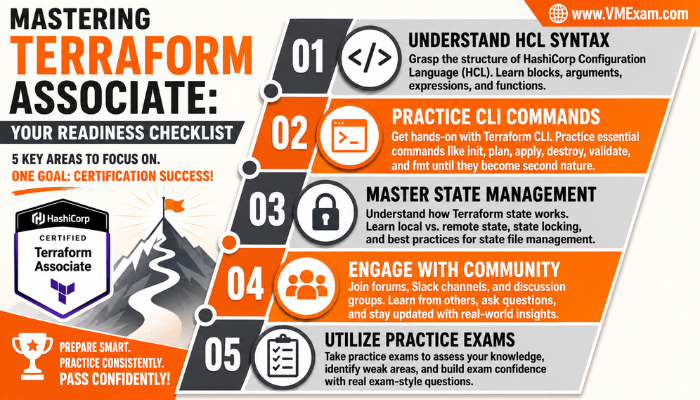
Success in the HashiCorp Certified Terraform Associate exam hinges on a strategic and comprehensive preparation approach. While no specific exam details are provided, general best practices for certification exams emphasize hands-on experience, thorough review of core concepts, and familiarization with the exam format. Candidates should dedicate time to understanding Terraform's command-line interface (CLI) and its application in various scenarios. Practical application of Terraform's declarative language to provision and manage resources across different cloud providers is invaluable. This hands-on engagement solidifies theoretical knowledge and builds confidence for the practical questions typically encountered in such certifications.
A well-rounded study plan often includes a mix of official documentation, online training courses, and rigorous practice. HashiCorp itself provides excellent learning resources, and numerous third-party platforms offer structured courses designed specifically for this associate-level certification. Engaging with the broader Terraform community through platforms like the vibrant HashiCorp community can also provide valuable insights and peer support. Remember, certification is a marathon, not a sprint, and consistent effort combined with smart study techniques will yield the best results.
Leveraging Official Resources and Training
The first step in effective preparation involves immersing oneself in the official documentation provided by HashiCorp. This ensures that candidates are learning from the authoritative source and understanding the concepts exactly as they are intended for the exam. Additionally, many find value in structured training courses, whether self-paced or instructor-led, which can help organize the vast amount of information into digestible modules. These courses often include hands-on labs that allow candidates to apply their knowledge in a practical setting, which is crucial for internalizing Terraform's workflow.
-
Official HashiCorp Guides: The definitive source for Terraform features, commands, and best practices.
-
Online Learning Platforms: Courses from reputable online learning providers that offer structured learning paths.
-
Hands-on Labs: Practical exercises where you deploy and manage infrastructure using Terraform in a real cloud environment.
These resources, when combined, create a strong foundation of both theoretical understanding and practical skill, which are both tested in the certification exam.
Mastering Practice with Sample Questions
One of the most effective ways to gauge readiness and identify knowledge gaps is through high-quality practice tests and sample questions. These resources simulate the exam environment and question styles, allowing candidates to become comfortable with the format and time constraints. Regularly attempting practice questions helps reinforce learning, highlight areas requiring further study, and build confidence. It is crucial to use practice tests that are reflective of the actual exam's difficulty and scope to ensure an accurate assessment of preparedness. Candidates seeking to test their knowledge can benefit from platforms offering high-quality sample questions specifically designed to mirror the actual exam.
Focus on understanding the explanations for both correct and incorrect answers in practice tests. This analytical approach transforms practice from mere memorization into a powerful learning experience, deepening comprehension of Terraform's nuances. Regularly reviewing areas where mistakes are made is key to turning weaknesses into strengths before the actual exam. This iterative process of practice, review, and targeted study is a proven pathway to success for many certification aspirants.
Beyond the Exam: Continuous Growth
Earning the HashiCorp Certified Terraform Associate certification is a significant achievement, but it also marks the beginning of a journey of continuous learning and professional development. The cloud and IaC landscapes are constantly evolving, with new features, providers, and best practices emerging regularly. Certified professionals are encouraged to stay updated with the latest advancements in Terraform and related technologies. This commitment to ongoing education ensures that their skills remain relevant and valuable in a rapidly changing industry. Engagement with professional communities and contributing to open-source projects are excellent ways to foster this continuous growth.
Maintaining an active presence in the Terraform ecosystem, whether through forums, user groups, or social media, provides opportunities for networking, sharing knowledge, and learning from peers. The certification serves as a robust foundation, upon which more specialized knowledge and advanced certifications can be built. This forward-looking perspective is vital for long-term career success and for making substantial contributions to an organization's infrastructure automation goals. The investment in certification is not just for the immediate benefit of a new credential, but for establishing a lifelong learning trajectory in a critical technology domain.
Engaging with the Terraform Ecosystem
The Terraform ecosystem is rich with resources and communities that can support ongoing learning and professional growth. Participating in discussions, attending virtual meetups, or contributing to documentation can deepen understanding and expose professionals to diverse use cases and solutions. Leveraging platforms such as professional Terraform communities or active Terraform discussion forums provides invaluable opportunities to connect with peers and experts. This collaborative environment is excellent for troubleshooting complex issues and staying abreast of new developments.
Active engagement helps professionals to not only consume knowledge but also to contribute their own insights, further solidifying their expertise and establishing themselves as thought leaders. By actively participating in these communities, certified associates can refine their problem-solving skills, explore advanced topics, and even discover new career opportunities. The dynamic nature of these communities ensures that there is always something new to learn and apply.
Pathways to Advanced Certification
For those looking to deepen their expertise, HashiCorp offers a clear certification path beyond the Associate level. While the HashiCorp Certified Terraform Associate is an excellent starting point, professionals can pursue more specialized certifications in specific HashiCorp products or advanced cloud platforms. For instance, certifications in Vault, Consul, Nomad, or specific cloud provider specialties can complement Terraform skills, leading to a broader and more robust skill set. This progression not only validates advanced knowledge but also demonstrates a career commitment to complex infrastructure challenges. Planning these next steps strategically can significantly enhance long-term career prospects and open doors to leadership roles in infrastructure automation.
These advanced credentials typically require more in-depth knowledge and hands-on experience with specific use cases, such as secrets management, service mesh, or container orchestration. By building upon the strong foundation established by the Terraform Associate certification, professionals can systematically expand their capabilities and become versatile experts capable of designing and implementing comprehensive cloud infrastructure solutions. This structured approach to skill development is highly beneficial for both personal career growth and organizational impact.
Measuring Professional Competence
The HashiCorp Certified Terraform Associate credential serves as a robust measure of professional competence in Infrastructure as Code. In an industry where practical skills often outweigh theoretical knowledge, a vendor-backed certification provides tangible proof of an individual's ability to perform specific tasks and understand critical concepts. This external validation assures employers that a candidate possesses the necessary skills to contribute effectively to IaC initiatives from day one. It removes ambiguity about a professional's capabilities, fostering trust and confidence in their technical prowess.
For individuals, the certification instills a sense of accomplishment and boosts self-confidence, empowering them to take on more challenging roles and responsibilities. It is a testament to their dedication to mastering a pivotal technology and their commitment to professional excellence. In a competitive job market, this measurable competence can be the distinguishing factor that sets a candidate apart, making them a preferred choice for employers seeking reliable and skilled talent. The process of preparing for and passing the exam itself is a journey of learning that solidifies existing skills and introduces new perspectives, further enhancing overall professional acumen.
Building Credibility in Cloud Roles
In cloud-focused roles, credibility is paramount. The ability to demonstrate a solid understanding of cloud infrastructure automation through a recognized certification like HashiCorp Certified Terraform Associate significantly enhances a professional's standing. It signals to peers, managers, and clients that the individual is not only familiar with the concepts but also capable of implementing them effectively in real-world scenarios. This credibility is essential for leading projects, making architectural decisions, and mentoring junior team members. It validates that a professional has moved beyond casual familiarity to a level of operational proficiency, which is crucial for high-stakes infrastructure management.
Standardizing Team Expertise
For organizations, encouraging and supporting employees to achieve the Terraform Associate certification helps standardize the level of expertise across their infrastructure teams. This standardization ensures that all team members share a common language, understanding, and set of best practices when working with Terraform. Such uniformity reduces discrepancies in configuration, minimizes errors, and improves overall team efficiency and collaboration. When everyone operates from a baseline of certified knowledge, projects run smoother, and critical infrastructure is managed with greater consistency and reliability. This collective uplift in expertise transforms individual skills into a powerful, cohesive team capability, directly impacting an organization's operational resilience and strategic agility.
Cultivating an IaC Mindset
Achieving the HashiCorp Certified Terraform Associate certification is not merely about passing an exam; it's about cultivating an Infrastructure as Code mindset. This involves thinking of infrastructure not as a collection of manually configured servers and networks, but as a system that can be defined, versioned, tested, and deployed like any other software application. This shift in perspective is crucial for embracing modern DevOps and cloud-native practices. A certified professional embodies this mindset, understanding the strategic implications of IaC for scalability, security, and operational efficiency across an enterprise. They grasp how treating infrastructure as code fosters a culture of automation, collaboration, and continuous improvement, driving significant long-term benefits.
This mindset extends to understanding the lifecycle of infrastructure from a code perspective, including how changes are proposed, reviewed, approved, and applied. It also encompasses a deep appreciation for immutability, desired state configuration, and idempotence—principles that ensure infrastructure deployments are predictable and reliable. The certification process reinforces these concepts, preparing individuals to advocate for and implement IaC best practices within their organizations. It equips them with the intellectual framework to approach infrastructure challenges with automation and reproducibility at the forefront, moving away from reactive, manual interventions towards proactive, systematic solutions.
Embracing Automation Principles
At the heart of the IaC mindset is the unwavering commitment to automation. The HashiCorp Certified Terraform Associate understands that any repetitive manual task related to infrastructure provisioning or management is a candidate for automation. This not only speeds up processes but also eliminates human error, a frequent source of outages and security breaches. They know how to identify opportunities for automation, design Terraform configurations to address them, and integrate these configurations into existing CI/CD pipelines. This proactive approach to automation frees up valuable engineering time, allowing teams to focus on innovation rather than repetitive operational tasks. It transforms IT operations from a cost center into a strategic enabler for business growth and innovation.
Fostering Collaborative Infrastructure Management
The IaC mindset also emphasizes collaboration. By defining infrastructure in human-readable and version-controlled code, teams can work together more effectively. Developers, operations engineers, and security specialists can all review, propose changes, and contribute to the infrastructure definition, ensuring that all perspectives are considered. The certification instills the importance of modularity, naming conventions, and documentation within Terraform configurations to facilitate this collaboration. This collaborative approach leads to more robust, secure, and efficient infrastructure, as collective intelligence is brought to bear on every aspect of its design and deployment. It breaks down traditional silos and fosters a shared responsibility for infrastructure health and performance.
Connecting with the Terraform Ecosystem
Successfully navigating the world of Terraform means more than just technical proficiency; it also involves actively engaging with its vibrant and expansive ecosystem. The HashiCorp Certified Terraform Associate is ideally positioned to connect with this global network of users, developers, and experts. This engagement is crucial for staying updated on the latest trends, best practices, and troubleshooting solutions. The community is a rich source of shared knowledge, open-source modules, and innovative approaches to complex infrastructure challenges. Active participation ensures that certified professionals are not isolated in their learning but are part of a larger, evolving conversation that continually pushes the boundaries of what's possible with Infrastructure as Code.
From online forums and social media groups to local meetups and global conferences, the opportunities for connection are abundant. These interactions provide invaluable learning experiences, expose individuals to different perspectives, and can even lead to new career opportunities or collaborative projects. Being an active member of the Terraform ecosystem is a commitment to lifelong learning and a demonstration of genuine passion for infrastructure automation. It's a testament to the belief that collective knowledge and collaboration are key drivers of progress in the fast-paced world of technology, reinforcing the value of the HashiCorp Certified Terraform Associate credential.
Community-Driven Learning and Support
The Terraform community is renowned for its active support and willingness to share knowledge. Whether it's through official HashiCorp forums, dedicated community chat channels, or technical discussion platforms, there are countless avenues for community-driven learning. Certified associates can leverage these resources to seek help on challenging configurations, share their own solutions, and participate in discussions that broaden their understanding. This peer-to-peer learning environment is incredibly effective for problem-solving and for keeping abreast of new features and provider updates. Many new Terraform modules and innovative solutions are born out of these community interactions, providing a constant stream of learning opportunities for engaged professionals.
Beyond problem-solving, the community often hosts webinars, workshops, and study groups, which can be immensely beneficial for both exam preparation and ongoing professional development. These informal learning environments offer a more dynamic and interactive way to learn compared to traditional methods, and they allow individuals to learn at their own pace while connecting with like-minded individuals. Such resources are particularly valuable for understanding nuanced aspects of Terraform that might not be explicitly covered in formal documentation, providing practical insights from real-world deployments.
Contributing to Open Source Initiatives
For those looking to deepen their engagement, contributing to Terraform's open-source initiatives offers a powerful way to enhance skills and build a professional reputation. This could involve contributing to Terraform providers, modules, or even improving the official documentation. Such contributions not only help the community but also demonstrate advanced proficiency and a commitment to the technology. Developers and engineers who contribute to open source gain invaluable experience working with diverse codebases, collaborating with global teams, and adhering to high standards of code quality. This hands-on experience goes a long way in reinforcing the skills validated by the HashiCorp Certified Terraform Associate certification and in developing expertise that is recognized industry-wide. These contributions are often highlighted in professional portfolios, showcasing a candidate's practical skills and dedication.
Advantages of Multi-Cloud Infrastructure Automation
The rise of multi-cloud strategies has further amplified the importance of tools like Terraform. Many organizations today leverage multiple cloud providers to avoid vendor lock-in, enhance resilience, or meet specific regulatory requirements. Managing infrastructure across these disparate environments manually is a monumental task, riddled with inconsistencies and potential errors. The HashiCorp Certified Terraform Associate possesses the skills to implement unified IaC strategies that span across different cloud platforms. This capability is a massive advantage for organizations, enabling them to provision and manage resources consistently, irrespective of the underlying cloud provider. This dramatically reduces complexity and operational overhead, empowering businesses to fully realize the benefits of a multi-cloud approach without sacrificing efficiency or control.
The certification prepares professionals to define common infrastructure patterns that can be deployed across various clouds, abstracting away the underlying provider-specific APIs. This not only streamlines deployments but also ensures that configurations are consistent and auditable across the entire multi-cloud footprint. Such standardization is critical for maintaining security policies, managing costs, and ensuring compliance in complex hybrid and multi-cloud environments. Professionals with this expertise are vital assets, helping organizations to navigate the complexities of modern cloud architectures effectively and strategically, making them sought-after experts in a rapidly evolving technological landscape.
Unified Infrastructure Management
Terraform's unique ability to act as a single control plane for multiple cloud providers is a game-changer for multi-cloud environments. Instead of learning and using distinct tools for AWS, Azure, and GCP, a HashiCorp Certified Terraform Associate can apply their knowledge to manage resources across all of them using a consistent workflow and language. This unification reduces the learning curve for teams, streamlines processes, and minimizes the risk of configuration drift between different cloud environments. It empowers organizations to deploy applications flexibly across clouds, choosing the best provider for each workload without introducing additional operational complexity.
This capability is particularly beneficial for global enterprises that might have specific cloud regions or services preferred in different geographies. By using Terraform, these organizations can ensure that their infrastructure adheres to consistent standards and practices worldwide, even when deploying to different cloud vendors. The certification validates an individual's capacity to design and implement these unified strategies, which are critical for achieving operational efficiency and strategic agility in a multi-cloud world. This skill set is foundational for architects and engineers building resilient, distributed systems.
Enhanced Resilience and Disaster Recovery
Multi-cloud strategies, when implemented effectively with IaC tools like Terraform, significantly enhance an organization's resilience and disaster recovery capabilities. By provisioning infrastructure consistently across multiple clouds, businesses can design failover mechanisms that automatically shift workloads from a compromised cloud provider to an alternative. The HashiCorp Certified Terraform Associate understands how to create these robust, redundant architectures, ensuring business continuity even in the face of major outages. This ability to build highly available and fault-tolerant systems is a critical skill, directly impacting an organization's ability to withstand unforeseen events and maintain uninterrupted service delivery.
Moreover, the declarative nature of Terraform allows for rapid reconstruction of infrastructure in a new cloud region or provider if a disaster strikes. This "infrastructure as code, disaster recovery as code" approach vastly reduces recovery time objectives (RTOs) and recovery point objectives (RPOs), which are vital metrics for business continuity planning. Certified professionals are key to designing and implementing these sophisticated disaster recovery solutions, leveraging Terraform's power to provision complex environments quickly and reliably. Their expertise contributes directly to the resilience and stability of an organization's entire IT footprint, protecting against significant financial and reputational damage.
Conclusion
The surging demand for HashiCorp Certified Terraform Associate professionals underscores the pivotal role of Infrastructure as Code in modern IT. This certification is not merely a credential; it's a testament to an individual's foundational expertise in managing cloud infrastructure with automation, consistency, and efficiency. It empowers professionals to navigate complex cloud environments, contribute to agile DevOps teams, and drive significant organizational efficiencies. For those aspiring to excel in cloud engineering, DevOps, or site reliability engineering, mastering Terraform and earning this certification is a strategic move that solidifies skills, opens career pathways, and fosters continuous professional growth.
Investing in this certification means investing in a future where infrastructure is elastic, reliable, and entirely programmatic. It's an opportunity to become an indispensable asset in any organization embracing digital transformation. Begin your journey toward becoming a certified Terraform Associate today and unlock a world of career possibilities. To further your preparation, explore our premium preparation resources and join the ranks of skilled IaC professionals making a tangible impact.
FAQs
What is the HashiCorp Certified Terraform Associate certification?
The HashiCorp Certified Terraform Associate certification validates an individual's fundamental understanding of Terraform concepts, its primary use cases, and how to automate infrastructure provisioning and management using the tool.
Who should pursue the HashiCorp Certified Terraform Associate certification?
This certification is ideal for cloud engineers, DevOps practitioners, site reliability engineers, and infrastructure professionals who aim to demonstrate their proficiency in Infrastructure as Code (IaC) with Terraform.
What are the main benefits of becoming a HashiCorp Certified Terraform Associate?
Benefits include enhanced career opportunities, validation of critical IaC skills, increased earning potential, improved credibility in cloud and DevOps roles, and the ability to drive organizational efficiency through automation.
How does Terraform benefit organizations in a multi-cloud environment?
Terraform enables unified infrastructure management across different cloud providers, ensuring consistency, reducing manual errors, enhancing resilience, and optimizing costs in complex multi-cloud and hybrid-cloud setups.
Are there any prerequisites for taking the HashiCorp Certified Terraform Associate exam?
While HashiCorp does not mandate formal prerequisites, candidates are typically expected to have basic terminal skills, a foundational understanding of cloud (AWS, Azure, GCP, etc.), and practical experience with Terraform's core workflow.
- Terraform Associate Mock Test |
- Terraform Associate Practice Exam |
- Terraform Associate Prep Guide |
- Terraform Associate Questions |
- Terraform Associate Simulation Questions |
- Terraform Associate |
- HashiCorp Certified - Terraform Associate Questions and Answers |
- HashiCorp Terraform Associate Study Guide |
- HashiCorp Infrastructure Automation Certification |
- Terraform Associate Exam Cost |
- Terraform Associate Passing Score |
- Terraform Associate Syllabus |
- Terraform Associate Online Test |
- HashiCorp Terraform Associate Exam Questions |
- HashiCorp Terraform Associate Cert Guide |
- Terraform Associate Certification Mock Test |
- Terraform Associate Exam Prep Guide |
- Terraform Associate Exam Price |
- HashiCorp Terraform Associate Practice Test |
- HashiCorp Terraform Associate Questions |
- Terraform Associate Mock Exam |
- Terraform Associate Simulator |
- HashiCorp Terraform Associate Books |
- HashiCorp Terraform Associate Certification |
- Terraform Associate Certification Sample Questions |
- Terraform Associate Study Guide


