
Master Zscaler ZDTE Now: Secure Tomorrow's IT Role
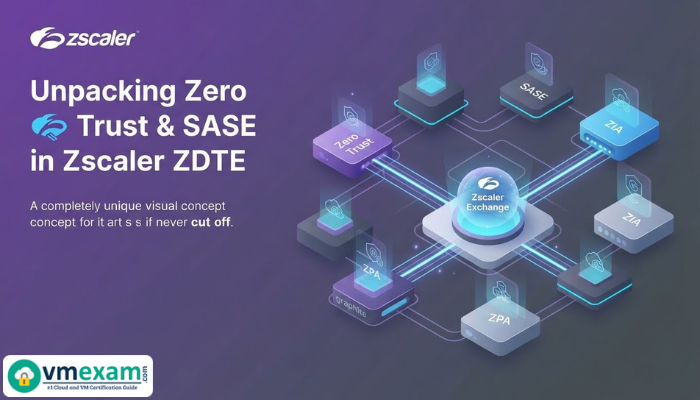
The Zscaler Digital Transformation Engineer (ZDTE) certification positions IT professionals at the forefront of modern cloud security, validating critical skills in designing and implementing Zscaler's Zero Trust Exchange platform. This credential is ideal for network, security, and cloud architects, as well as engineers seeking to pivot into roles that demand expertise in secure digital transformation. This comprehensive guide delves into the ZDTE certification's relevance, the core concepts it covers, effective preparation strategies, and the significant career advantages it offers in a rapidly evolving digital landscape.
Defining the Zscaler Digital Transformation Engineer Role
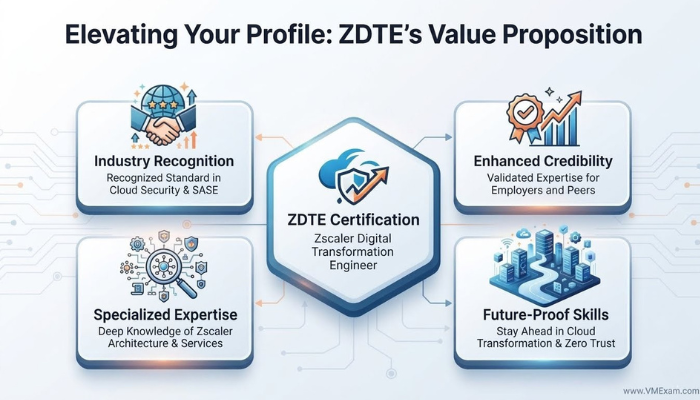
The Zscaler Digital Transformation Engineer (ZDTE) plays a pivotal role in enabling organizations to securely embrace cloud and mobility initiatives. This professional understands how to move beyond traditional perimeter-based security to a Zero Trust architecture, which is fundamental to protecting users, applications, and data in any environment. The ZDTE certification, with its focus on Zscaler's innovative platform, directly addresses the industry's demand for experts who can implement robust, scalable cloud-native security solutions.
The role is about architecting and operationalizing Zscaler's core services to provide secure access to the internet (ZIA) and private applications (ZPA), ensuring a seamless and secure experience for the distributed workforce. Professionals who earn this certification demonstrate their capacity to:
-
Design: Develop secure network architectures utilizing Zscaler's Zero Trust principles.
-
Implement: Configure and deploy Zscaler solutions for internet access and private application connectivity.
-
Optimize: Enhance security postures and network performance within cloud environments.
-
Transform: Guide organizations through the complexities of digital transformation with a security-first mindset.
Strategic Advantage of Zscaler ZDTE Certification
Earning the Zscaler ZDTE certification offers a significant strategic advantage for IT professionals navigating a competitive job market. It signals to employers a deep understanding of cloud security, Zero Trust principles, and the practical application of Zscaler's leading platform. This expertise is crucial as more enterprises migrate their workloads to the cloud and adopt hybrid work models, requiring secure access from anywhere, to any application.
The demand for skilled professionals capable of implementing Software-Defined Wide Area Network (SD-WAN) and Secure Access Service Edge (SASE) solutions continues to grow exponentially. ZDTE-certified individuals are uniquely positioned to meet this demand, armed with the knowledge to deploy the Zscaler Zero Trust Exchange, a cornerstone of modern SASE architectures. This makes the certification not just a validation of technical skills but a direct gateway to new career opportunities in high-demand areas.
To explore the broader impact of Zscaler certifications on career growth, consider visiting the official Zscaler Academy page for additional insights into their professional development paths.
Driving Career Transition with Cloud Security Skills
For many IT professionals, the Zscaler ZDTE certification represents a clear pathway for career transition, particularly for those looking to move from traditional networking or on-premises security roles into cloud-focused domains. The skills validated by ZDTE are directly applicable to roles such as Cloud Security Engineer, Zero Trust Architect, or SASE Specialist, which are highly sought after across various industries. This transition is not merely about learning new tools but about adopting a fundamentally different approach to security that aligns with contemporary enterprise needs.
The certification demonstrates a proactive effort to stay relevant in an evolving technological landscape, showcasing adaptability and a commitment to mastering future-proof security paradigms. It validates your ability to contribute to critical infrastructure projects involving secure cloud adoption, remote workforce enablement, and complex network modernization initiatives. This forward-looking expertise helps bridge the gap between legacy systems and next-generation architectures, making certified individuals invaluable assets.
Architecting Secure Connectivity with Zero Trust Principles
The Zscaler ZDTE certification heavily emphasizes the architectural shifts required to implement Zero Trust principles effectively. Traditional security models, relying on perimeter defenses, are inadequate in a world where users are remote and applications reside in diverse cloud environments. Zero Trust dictates that no user or device should be inherently trusted, regardless of their location, requiring strict verification for every access attempt.
Zscaler's Zero Trust Exchange is a cloud-native platform designed to enforce these principles by securely connecting users directly to applications, rather than connecting users to the network. This eliminates the attack surface and prevents lateral movement, significantly enhancing an organization's security posture. Mastering these concepts is central to the ZDTE exam, preparing candidates to design and implement robust, identity-centric security frameworks.
Implementing Zscaler Zero Trust Architecture
Implementing Zscaler's Zero Trust Architecture involves a deep understanding of how to configure policies that grant access based on identity, context, and security posture, not network location. This includes segmenting access, scrutinizing traffic, and ensuring least-privilege principles are consistently applied across all user-to-application connections. The ZDTE curriculum focuses on the practical aspects of transforming security operations to align with this paradigm.
Key implementation considerations include:
-
Identity-Based Segmentation: Moving away from IP-based segmentation to user and application identity for access control.
-
Policy Enforcement: Creating granular policies that define who can access what, under what conditions, and for how long.
-
Contextual Access: Utilizing device posture, location, time of day, and application health to make dynamic access decisions.
-
Visibility and Logging: Ensuring comprehensive visibility into all traffic and access events for auditing and threat detection.
Integrating SASE for Comprehensive Security
The Secure Access Service Edge (SASE) model represents a convergence of network and security functions into a single, cloud-delivered service. Integrating SASE is a critical skill for a Digital Transformation Engineer, as it allows organizations to simplify their IT infrastructure, enhance security, and improve performance for a distributed workforce. The Zscaler ZDTE certification provides the necessary expertise to implement SASE effectively using Zscaler's platform.
SASE integrates various security services like Secure Web Gateway (SWG), Cloud Access Security Broker (CASB), Zero Trust Network Access (ZTNA), and Firewall-as-a-Service (FWaaS) with wide area networking capabilities. Zscaler's Zero Trust Exchange naturally aligns with the SASE framework, offering a unified platform that secures access to the internet, cloud services, and private applications from anywhere. This integration is vital for reducing complexity and cost while delivering consistent security policies globally.
For a detailed breakdown of the technical components and how they contribute to a modern SASE implementation, interested candidates can review the Zscaler ZDTE exam blueprint, which outlines key areas of focus.
SASE Implementation Strategies for a Hybrid Workforce
Implementing SASE for a hybrid workforce requires a strategic approach that prioritizes secure, direct-to-cloud access and consistent policy enforcement. The Zscaler Digital Transformation Engineer understands how to design SASE architectures that accommodate both remote and office-based users, ensuring optimal performance and security regardless of their location. This includes leveraging local internet breakouts and enforcing security policies at the edge of the network.
Effective SASE implementation focuses on:
-
Cloud-Native Deployment: Utilizing a cloud-based security stack that scales with business needs and is globally distributed.
-
Unified Policy Management: Applying consistent security policies across all users, devices, and applications from a central console.
-
Performance Optimization: Routing traffic through the shortest path to the application, bypassing traditional VPNs and reducing latency.
-
Scalability and Resilience: Building an infrastructure that can easily adapt to fluctuating user demands and maintain high availability.
Securing Zscaler Internet Access (ZIA) Deployments
Zscaler Internet Access (ZIA) is a foundational component of the Zscaler Zero Trust Exchange, designed to securely connect users to the internet and SaaS applications. For a Zscaler Digital Transformation Engineer, mastering ZIA deployments is critical for preventing advanced threats, ensuring data protection, and maintaining compliance for all internet-bound traffic. The ZDTE certification covers the intricate details of configuring and managing ZIA services.
ZIA operates as a cloud-based security stack, inspecting all internet traffic in-line, irrespective of user location. This includes advanced threat protection, sandboxing, data loss prevention (DLP), and cloud firewall services. Professionals with ZDTE expertise can design and implement ZIA solutions that not only block known threats but also detect and mitigate zero-day attacks and insider threats, providing comprehensive protection for the modern enterprise.
Optimizing Internet Access Security with ZIA
Optimizing Internet Access Security with ZIA involves careful configuration of security policies, traffic forwarding mechanisms, and integration with other enterprise systems. A ZDTE-certified engineer can fine-tune ZIA settings to balance robust security with user experience, ensuring that legitimate traffic flows unimpeded while malicious content is effectively blocked. This level of optimization is crucial for maintaining productivity and protecting valuable organizational assets.
Key optimization areas include:
-
Policy Granularity: Crafting specific policies for different user groups, applications, and content categories to enforce least privilege.
-
Traffic Forwarding: Efficiently directing user traffic to the nearest Zscaler data center using various methods such as PAC files, GRE tunnels, or IPsec VPNs.
-
Advanced Threat Protection: Configuring features like Cloud Sandbox, Advanced Threat Protection (ATP), and Browser Isolation to defend against sophisticated threats.
-
Data Loss Prevention: Implementing DLP policies to prevent sensitive information from leaving the organization's network via internet channels.
-
Bandwidth Control: Managing bandwidth usage for non-business-critical applications to preserve network resources for essential services.
Enabling Secure Private Application Access with ZPA
Zscaler Private Access (ZPA) is the other cornerstone of the Zscaler Zero Trust Exchange, focused on providing secure, direct-to-application access for private applications without placing users on the corporate network. For a Zscaler Digital Transformation Engineer, understanding ZPA is essential for modernizing access to internal applications, whether they reside in the data center or public cloud environments. The ZDTE curriculum provides in-depth knowledge of ZPA's architecture and deployment.
ZPA eliminates the need for traditional VPNs, which often grant users full network access, creating a broad attack surface. Instead, ZPA creates an encrypted micro-tunnel from the user's device directly to the specific application they are authorized to access, effectively making applications invisible to unauthorized users. This "darknet" approach significantly reduces risk and simplifies remote access, making it a powerful tool for secure digital transformation.
Configuring Zscaler Private Access (ZPA) Solutions
Configuring Zscaler Private Access (ZPA) solutions requires expertise in defining application segments, deploying Zscaler Connectors, and setting up granular access policies. The ZDTE certification equips engineers with the skills to establish secure, high-performance connections to private applications while adhering to Zero Trust principles. This includes managing user and group access, ensuring application availability, and monitoring application usage.
Effective ZPA configuration involves several key steps:
-
Application Segmentation: Defining groups of private applications that users can access.
-
Zscaler Connector Deployment: Installing lightweight virtual machines or containers within data centers or cloud environments to establish outbound connections to the Zscaler cloud.
-
Access Policy Creation: Crafting policies that specify which users or groups can access particular application segments, under what conditions.
-
User Authentication Integration: Integrating with identity providers (IdPs) like Okta or Azure AD for seamless and secure user authentication.
-
Health and Performance Monitoring: Utilizing ZPA's diagnostics and logs to ensure optimal application performance and troubleshoot issues.
Validated Skills: What the Zscaler ZDTE Certification Signifies
The Zscaler ZDTE certification signifies a robust set of validated skills crucial for modern IT infrastructure and security roles. It moves beyond theoretical knowledge to confirm a candidate's ability to apply Zscaler's Zero Trust principles in practical, real-world scenarios. This includes architectural design, implementation, and operational management of cloud-native security platforms.
Holding this certification demonstrates proficiency in:
-
Zero Trust Architecture: Deep understanding of Zero Trust principles and their practical application with Zscaler.
-
SASE Implementation: Capability to deploy and manage comprehensive Secure Access Service Edge solutions.
-
ZIA and ZPA Expertise: Hands-on skills in securing internet access and private applications using Zscaler's core services.
-
Cloud Security Design: Ability to design secure solutions for hybrid and multi-cloud environments.
-
Network Modernization: Knowledge to transform traditional network security models into agile, cloud-centric architectures.
For those seeking to validate and advance their expertise in Zscaler technologies, exploring relevant Zscaler study resources can significantly aid in preparation and skill development.
Charting Your ZDTE Preparation Journey
Preparing for the Zscaler ZDTE certification requires a structured approach that combines theoretical study with practical, hands-on experience. Given the comprehensive nature of the exam, candidates should allocate sufficient time to grasp the core concepts of Zero Trust, SASE, ZIA, and ZPA, as well as their intricate interdependencies within the Zscaler ecosystem. A well-rounded preparation strategy is crucial for success.
Effective Study Resources and Methods
Effective study for the ZDTE exam involves leveraging official Zscaler documentation, training courses, and community forums. While specific exam topics are not provided, focusing on Zscaler's foundational products and architectural best practices will be highly beneficial. This includes understanding the deployment models, policy configurations, and troubleshooting scenarios for ZIA and ZPA.
Consider incorporating these resources into your study plan:
-
Official Zscaler Training: Engage with Zscaler Academy's recommended courses and learning paths.
-
Documentation and Guides: Refer to Zscaler's extensive technical documentation for an in-depth understanding of product features and deployment specifics.
-
Hands-On Labs: Practical experience configuring Zscaler services is invaluable. Utilize lab environments to apply theoretical knowledge.
-
Community Forums: Participate in Zscaler community discussions to learn from others' experiences and clarify complex topics.
Importance of Practice Exams
Integrating practice exams into your ZDTE preparation journey is essential for gauging your readiness and identifying areas that require further attention. Practice exams help familiarize you with the question format, time management, and the overall rhythm of the actual certification test. They provide a realistic simulation of the exam environment, allowing you to build confidence before the big day. It's recommended to take multiple practice tests to ensure comprehensive coverage of potential topics.
Engaging with high-quality practice questions and understanding the underlying concepts for each answer is a highly effective study method. This iterative process of testing, reviewing, and reinforcing knowledge solidifies your understanding and improves retention. While practice tests are a powerful tool, remember that ethical preparation focuses on understanding the concepts, not memorizing answers. For comprehensive practice, explore the available Zscaler practice tests.
Unlocking Career Opportunities with Zscaler ZDTE
Obtaining the Zscaler ZDTE certification significantly expands career opportunities, placing professionals in high demand across various industries. Organizations are actively seeking experts who can design, implement, and manage secure cloud-native architectures that support digital transformation initiatives. The ZDTE credential directly aligns with these critical needs, opening doors to advanced and specialized roles.
Certified individuals are well-equipped for positions that demand expertise in secure network and application access. This includes roles such as:
-
Cloud Security Architect: Designing robust security frameworks for cloud environments.
-
Network Security Engineer: Implementing and managing Zscaler solutions for network protection.
-
Zero Trust Solutions Consultant: Guiding clients in adopting and optimizing Zero Trust models.
-
SASE Operations Specialist: Managing the deployment and ongoing operations of SASE architectures.
-
Digital Transformation Lead: Overseeing the secure transition of enterprise IT infrastructure to modern platforms.
These roles often come with competitive salaries and opportunities for continuous professional growth, reflecting the specialized nature and business impact of Zscaler expertise. The certification not only validates current skills but also paves the way for leadership positions in the evolving cybersecurity landscape.
Beyond Certification: Sustaining Your Zscaler Expertise
Achieving the Zscaler ZDTE certification marks a significant milestone, but the journey of expertise doesn't end there. The field of cybersecurity and cloud technology is constantly evolving, with new threats, technologies, and best practices emerging regularly. Sustaining your Zscaler expertise requires a commitment to continuous learning and staying updated with the latest advancements in the Zscaler platform and the broader industry.
This ongoing commitment includes participating in Zscaler webinars, attending industry conferences, and subscribing to security intelligence reports. Engaging with the Zscaler community and actively contributing to discussions can also provide invaluable insights and networking opportunities. By continuously refining your skills and knowledge, you ensure that your ZDTE certification remains a powerful asset throughout your career, reflecting a current and deep understanding of cloud security innovation. The most impactful professionals are those who see certification as a stepping stone, not a finish line, continuously adapting to new challenges and contributing to a more secure digital future.
Conclusion
The Zscaler Digital Transformation Engineer (ZDTE) certification is more than just a credential; it's a strategic investment in a future-proof career. It equips IT professionals with the essential skills to design, implement, and manage Zscaler's cutting-edge Zero Trust Exchange, a cornerstone of modern cloud security and SASE architectures. By mastering ZIA and ZPA, candidates position themselves as indispensable assets in any organization undergoing digital transformation.
This certification is your pathway to unlocking advanced career opportunities, transitioning into high-demand roles, and contributing to secure, agile enterprise environments. It signifies your readiness to tackle the complex challenges of cloud and hybrid security, solidifying your expertise in a domain that is critical to global businesses. Embrace the opportunity to lead the charge in securing tomorrow's IT infrastructure.
Ready to solidify your expertise and advance your career in cloud security? Begin your journey towards the Zscaler Digital Transformation Engineer certification today. Explore detailed study guides, essential preparation resources, and practice exams designed to help you succeed. Visit VMExam.com to take the next step in securing your professional future.
FAQs
1. What does the Zscaler ZDTE certification validate?
The Zscaler ZDTE certification validates an IT professional's ability to design, implement, and manage secure digital transformation solutions using the Zscaler Zero Trust Exchange, specifically focusing on Zscaler Internet Access (ZIA) and Zscaler Private Access (ZPA) components.
2. Who should pursue the Zscaler ZDTE certification?
The ZDTE certification is ideal for network, security, and cloud engineers, architects, or IT professionals looking to transition into cloud-centric security roles or enhance their expertise in Zero Trust and SASE architectures.
3. What are the career benefits of becoming ZDTE certified?
ZDTE certification can lead to enhanced career opportunities in high-demand roles like Cloud Security Engineer, Zero Trust Architect, and SASE Specialist, often accompanied by competitive salaries and increased professional recognition.
4. How should one prepare for the Zscaler ZDTE exam?
Preparation typically involves studying official Zscaler documentation, participating in Zscaler Academy training, gaining hands-on experience with Zscaler platforms, and utilizing practice exams to assess readiness and identify knowledge gaps.
5. Is hands-on experience crucial for passing the Zscaler ZDTE exam?
Yes, practical, hands-on experience with Zscaler Internet Access (ZIA) and Zscaler Private Access (ZPA) configuration and deployment is highly beneficial for the ZDTE exam, as it helps solidify theoretical knowledge and understanding of real-world applications.
- ZDTE Digital Transformation Engineer |
- ZDTE Mock Test |
- ZDTE Practice Exam |
- ZDTE Prep Guide |
- ZDTE Questions |
- ZDTE Simulation Questions |
- ZDTE |
- Zscaler Digital Transformation Engineer Certification Questions and Answers |
- Digital Transformation Engineer Online Test |
- Digital Transformation Engineer Mock Test |
- Zscaler ZDTE Study Guide |
- Zscaler Digital Transformation Engineer Exam Questions |
- Zscaler Engineer Certification |
- Zscaler Digital Transformation Engineer Cert Guide |
- Digital Transformation Engineer Certification Mock Test |
- Digital Transformation Engineer Simulator |
- Digital Transformation Engineer Mock Exam |
- Zscaler Digital Transformation Engineer Questions |
- Digital Transformation Engineer |
- Zscaler Digital Transformation Engineer Practice Test |
- ZDTE Books |
- ZDTE Exam Cost |
- ZDTE Passing Score |
- ZDTE Syllabus |
- Digital Transformation Engineer Exam Books |
- Zscaler Digital Transformation Engineer Certification |
- Digital Transformation Engineer Certification Syllabus |
- Digital Transformation Engineer Exam Prep Guide


