
Beyond Linux Pros: KCA Certification is Your Career Catalyst

The Linux Foundation Kyverno Certified Associate (KCA) certification stands as a pivotal credential for professionals aiming to solidify their expertise in Kubernetes policy management. This exam, KCA, is specifically designed for site reliability engineers, cloud administrators, and developers who manage Kubernetes environments and seek to enforce security and compliance through robust policy-as-code solutions. It validates a candidate's foundational knowledge and practical skills in leveraging Kyverno, the powerful Kubernetes native policy engine, to define, validate, mutate, and generate configurations. This comprehensive guide delves into the significance of KCA, its examination details, syllabus, and strategic preparation insights, empowering you to navigate this crucial step in your cloud-native career.
Advancing Kubernetes Management Through Policy-as-Code
In the evolving landscape of cloud-native infrastructure, effective governance and automation are paramount. The Kyverno Certified Associate certification directly addresses this need by focusing on Kyverno, an admission controller that can manage and validate configurations, generate resources, and mutate existing resources based on policies. This approach, known as policy-as-code, provides a declarative and version-controlled way to enforce best practices, security standards, and operational guidelines across Kubernetes clusters. Achieving the KCA credential signals a professional’s ability to implement critical control planes, ensuring that deployments adhere to organizational mandates without manual intervention, thereby reducing human error and enhancing system reliability.
Unpacking the Kyverno Certified Associate Exam
Understanding the structure of the KCA examination is the first step toward successful preparation. The Linux Foundation Kyverno Certified Associate exam (KCA) is a performance-based test that assesses practical skills in a live Kubernetes environment. Candidates are challenged to solve real-world problems using Kyverno policies.
The exam details are as follows:
-
Exam Name: Linux Foundation Kyverno Certified Associate
-
Exam Code: KCA
-
Exam Price: $250 USD
-
Duration: 90 minutes
-
Number of Questions: 60
-
Passing Score: 75%
This format emphasizes hands-on proficiency, requiring candidates to not only understand Kyverno concepts but also to apply them effectively under timed conditions. Preparing for a practical exam like the KCA involves more than memorization; it demands deep comprehension and extensive practice.
Mapping Your Expertise: The KCA Syllabus Topics
The KCA certification evaluates a candidate's proficiency across several critical domains of Kyverno. Each section of the syllabus is designed to build a comprehensive skill set necessary for effective Kubernetes policy management. Candidates need to master these areas to confidently tackle the exam's challenges.
The syllabus topics, along with their respective weightages, include:
-
Fundamentals of Kyverno (18%): This section covers the core concepts of Kyverno, its architecture, and how it integrates within the Kubernetes ecosystem. Understanding the fundamental components and their interactions is crucial for building a strong base.
-
Installation, Configuration, and Upgrades (18%): Candidates are expected to demonstrate knowledge in deploying Kyverno in various Kubernetes environments, configuring its components, and managing upgrades efficiently to maintain a stable policy engine.
-
Kyverno CLI (12%): Proficiency with the Kyverno Command Line Interface is essential for policy testing, validation, and debugging outside a live cluster. This tool enhances development workflows and speeds up iteration cycles.
-
Applying Policies (10%): This domain focuses on the practical application of Kyverno policies to enforce specific rules for resources within Kubernetes clusters, covering various policy types and their enforcement mechanisms.
-
Writing Policies (32%): As the most heavily weighted section, this requires deep expertise in crafting effective Kyverno policies using YAML. It includes understanding policy rules, conditions, variables, and advanced features for complex scenarios.
-
Policy Management (10%): This involves the lifecycle management of policies, including versioning, auditing, troubleshooting, and ensuring policies remain effective and up-to-date with evolving cluster requirements.
Success in the KCA exam hinges on a balanced understanding and practical application of all these topics. Each domain contributes to the overall ability to secure and manage Kubernetes clusters effectively with Kyverno. For a detailed breakdown of each objective, consulting the official certification page is highly recommended.
Catalyzing Career Growth with KCA Credibility
Attaining the Kyverno Certified Associate certification significantly enhances a professional’s career trajectory, particularly for those involved in cloud-native operations and security. It serves as a tangible demonstration of expertise in a critical and in-demand area of Kubernetes. Organizations increasingly seek individuals who can automate governance and ensure compliance through policy-as-code, making KCA holders invaluable assets. This certification doesn't just validate skills; it opens doors to specialized roles such as Cloud Security Engineer, Kubernetes Administrator, DevOps Engineer, and Site Reliability Engineer, where Kyverno knowledge is a distinct advantage. Professionals with this credential are seen as thought leaders capable of implementing robust security frameworks and streamlining operational workflows in complex Kubernetes environments.
Enhancing Role Effectiveness
For existing Linux professionals or those transitioning into cloud-native roles, KCA provides a critical edge. It equips them with the ability to transcend basic cluster management to implement advanced security and operational policies. This translates into more efficient resource utilization, fewer security vulnerabilities, and a higher degree of automation. Certified individuals can lead initiatives to standardize configurations, prevent misconfigurations, and ensure continuous adherence to organizational policies, thereby boosting their team's overall effectiveness and reliability. This expertise is particularly valuable in highly regulated industries or environments with stringent security requirements.
Opening New Opportunity Pathways
The demand for Kubernetes experts who understand policy enforcement is rapidly growing. Companies are investing heavily in cloud-native security and governance, creating a strong market for professionals with specialized Kyverno skills. The KCA certification positions you at the forefront of this demand, making you a highly sought-after candidate for roles that require deep knowledge of Kubernetes security and automation. It signifies your readiness to tackle complex challenges in dynamic cloud environments, making you a more attractive prospect for promotions and new job opportunities. It also allows you to explore consulting roles, where your expertise in policy-as-code can guide multiple organizations toward best practices.
Strategic Preparation for KCA Certification Success
Effective preparation for the KCA exam requires a structured approach that combines theoretical knowledge with hands-on practice. Given its performance-based nature, candidates must immerse themselves in practical scenarios and gain comfort with Kyverno in a live environment. There is no shortcut to mastering Kyverno consistent effort and strategic study are key.
Mastering Core Kyverno Concepts
Begin by thoroughly understanding the core components and principles of Kyverno. This involves studying the official documentation, engaging with community resources, and exploring use cases. Focus on how Kyverno operates as an admission controller, its various policy types (validation, mutation, generation), and its integration points within Kubernetes. A strong conceptual foundation will make practical application much easier. Utilize resources available on the Linux Foundation website and other trusted platforms to build this base.
Intensive Hands-on Practice
Since the KCA is a practical exam, hands-on experience is non-negotiable. Set up a local Kubernetes cluster (e.g., using Minikube or KinD) and install Kyverno. Experiment with writing and applying different types of policies, testing their effects on various Kubernetes resources. Practice debugging policies using the Kyverno CLI and interpreting policy reports. Create scenarios that mimic real-world challenges, such as enforcing image pull policies, restricting resource requests, or mutating labels. Repetitive practice builds muscle memory and speeds up your problem-solving abilities under pressure. For more dedicated study, exploring professional Kyverno Certified Associate exam preparation resources can be beneficial.
Leveraging Study Guides and Sample Questions
While practical experience is paramount, supplementary materials can streamline your learning. Look for comprehensive study guides that align with the KCA syllabus and provide clear explanations and examples. Engaging with sample KCA questions can help you understand the format and types of tasks you'll encounter on the actual exam. These resources often include practical exercises and scenarios that reinforce your understanding and highlight areas requiring further attention. Critically analyze both correct and incorrect answers to deepen your knowledge.
Time Management and Exam Simulation
The 90-minute duration for 60 questions implies that efficient time management is critical. Practice solving problems under timed conditions to improve your speed and accuracy. Familiarize yourself with the exam environment, which is typically a remote desktop with access to a Kubernetes cluster and a terminal. Simulating the exam experience will help reduce anxiety and build confidence. Focus on prioritizing tasks, quickly identifying solutions, and effectively using documentation if allowed by the exam provider.
Embracing Ethical Preparation for Your KCA Journey
The pursuit of professional certifications like the KCA should always be underpinned by ethical study practices. Relying on unethical methods, such as exam dumps, undermines the value of the certification and, more importantly, your own learning. True mastery comes from understanding the concepts and being able to apply them, not from memorizing answers. Invest your time and effort in genuine learning and hands-on experience. This not only ensures you pass the exam fairly but also that you possess the actual skills required to excel in your role. The integrity of your certification reflects directly on your professional credibility.
Assessing the Value of KCA in Today's Landscape
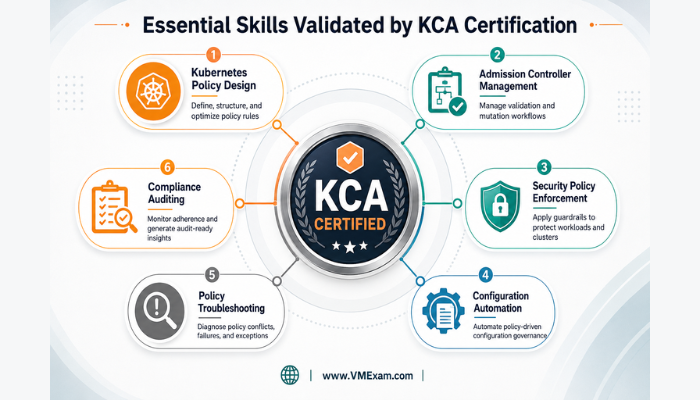
Many professionals question whether a specific certification is "worth it" in the context of their career goals. For the KCA certification, its value proposition is strong, especially for those operating or aspiring to operate in cloud-native environments. Kyverno is an increasingly adopted tool for Kubernetes policy enforcement, lauded for its native integration and ease of use compared to other solutions. Therefore, expertise in Kyverno is not just a niche skill but a growing necessity for maintaining secure, compliant, and well-governed Kubernetes clusters.
The KCA credential signals to employers that you possess a specialized skill set in a crucial area of cloud security and operations. It demonstrates proactive learning and a commitment to staying current with industry best practices. This can lead to increased earning potential, greater job security, and enhanced opportunities for career advancement. Furthermore, the practical, performance-based nature of the exam ensures that certified individuals can immediately contribute value to their organizations by implementing and managing Kyverno policies effectively. For anyone working with Kubernetes, or planning to specialize in cloud infrastructure and security, KCA is a highly relevant and valuable investment.
Conclusion
The Linux Foundation Kyverno Certified Associate (KCA) certification is more than just another badge; it's a strategic asset for professionals navigating the complexities of Kubernetes and cloud-native security. It validates a critical skill set in policy-as-code, positioning you as an expert capable of designing, implementing, and managing robust governance within dynamic environments. From enhancing operational efficiency to opening new career pathways, KCA provides a clear catalyst for professional growth.
Invest in your future and leverage the power of Kyverno to secure and streamline Kubernetes deployments. By committing to comprehensive preparation, focusing on hands-on practice, and embracing ethical study, you can confidently achieve your KCA certification. Begin your preparation today and unlock a realm of advanced opportunities in Kubernetes policy management. Explore expert-curated study materials and resources to jumpstart your journey at VMExam.
FAQs
1. What does the KCA certification validate?
The KCA certification validates a candidate's foundational knowledge and practical skills in leveraging Kyverno, the Kubernetes native policy engine, to define, validate, mutate, and generate configurations within Kubernetes environments, particularly focusing on security and compliance policies.
2. Who should consider taking the KCA exam?
The KCA exam is ideal for site reliability engineers, cloud administrators, DevOps engineers, and developers who work with Kubernetes and need to enforce security, compliance, and best practices through policy-as-code using Kyverno.
3. Is the KCA exam performance-based or multiple-choice?
The KCA exam is a performance-based test, meaning candidates are required to solve practical problems in a live Kubernetes environment rather than answering multiple-choice questions. This assesses real-world application of Kyverno skills.
4. How much does the KCA certification exam cost?
The Linux Foundation Kyverno Certified Associate (KCA) exam costs $250 USD. This fee typically includes one attempt at the certification exam.
5. What kind of career opportunities can KCA certification open?
KCA certification can open doors to specialized roles such as Cloud Security Engineer, Kubernetes Administrator, DevOps Engineer, and Site Reliability Engineer. It demonstrates expertise in a highly sought-after area of cloud-native security and automation, enhancing career growth and earning potential.
- Linux Foundation Cloud & Containers Certification |
- KCA Kyverno Associate |
- KCA Mock Test |
- KCA Practice Exam |
- KCA Prep Guide |
- KCA Questions |
- KCA Simulation Questions |
- KCA |
- Kyverno Certified Associate (KCA) Questions and Answers |
- Kyverno Associate Online Test |
- Kyverno Associate Mock Test |
- Linux Foundation KCA Study Guide |
- Linux Foundation Kyverno Associate Exam Questions |
- Linux Foundation Kyverno Associate Cert Guide |
- Kyverno Associate Certification Mock Test |
- Kyverno Associate Simulator |
- Kyverno Associate Mock Exam |
- Linux Foundation Kyverno Associate Questions |
- Kyverno Associate |
- Linux Foundation Kyverno Associate Practice Test |
- KCA Books |
- KCA Exam Cost |
- KCA Passing Score |
- KCA Syllabus |
- Kyverno Associate Exam Books |
- Kyverno Certified Associate (KCA) |
- Kyverno Associate Certification Syllabus |
- Kyverno Associate Exam Prep Guide |
- Kyverno Associate Exam Price |
- Kyverno Associate Study Guide |
- Kyverno Associate Training |
- Linux Foundation Kyverno Associate Training |
- Kyverno Associate Certification Cost


