
Don’t Just Build: Plat-UX-102 Demands Foresight
 The Salesforce Platform Strategy Designer certification, Plat-UX-102, validates an individual's ability to design comprehensive, human-centered solutions on the Salesforce Platform, aligning business objectives with technical feasibility and user experience. This credential is designed for architects, consultants, and strategists seeking to drive digital transformation and maximize platform value. This article delves into the strategic demands of Plat-UX-102, exploring its relevance in an evolving digital landscape, the core competencies it validates, and effective approaches to preparation.
Understanding Plat-UX-102: The Strategic Overview
Achieving the Salesforce Platform Strategy Designer certification signifies a professional's expertise in translating business vision into actionable platform strategies. It moves beyond mere technical implementation, focusing on the foresight required to build sustainable, scalable, and impactful Salesforce solutions. This role demands a holistic view, integrating user experience, business processes, and technological capabilities to create cohesive and forward-looking strategies.
The credential assesses a candidate’s capacity to articulate a platform vision, identify key stakeholders, define measurable outcomes, and guide the evolution of digital solutions. It ensures that Salesforce professionals can lead strategic discussions, mitigate risks, and ensure that every platform decision contributes to long-term organizational success. This strategic perspective is crucial for companies leveraging Salesforce as a core component of their digital ecosystem.
Exam Structure and Financials: Navigating the Plat-UX-102 Path
Aspiring Salesforce Platform Strategy Designers must understand the specific parameters of the Plat-UX-102 examination to prepare effectively. The exam is structured to rigorously assess strategic thinking and design capabilities, ensuring certified individuals possess a comprehensive understanding of platform strategy.
-
Exam Name: Salesforce Platform Strategy Designer
-
Exam Code: Plat-UX-102
-
Duration: 105 minutes
-
Number of Questions: 65 multiple-choice questions
-
Passing Score: 70%
-
Registration Fee: USD 200
-
Retake Fee: USD 100
These details highlight the commitment required to earn this credential. Candidates are tested not only on their knowledge but also on their ability to apply strategic principles under timed conditions. For more detailed information on the exam, including registration specifics, candidates can visit the official Plat-UX-102 exam page.
Domain Expertise: Delving into the Plat-UX-102 Syllabus
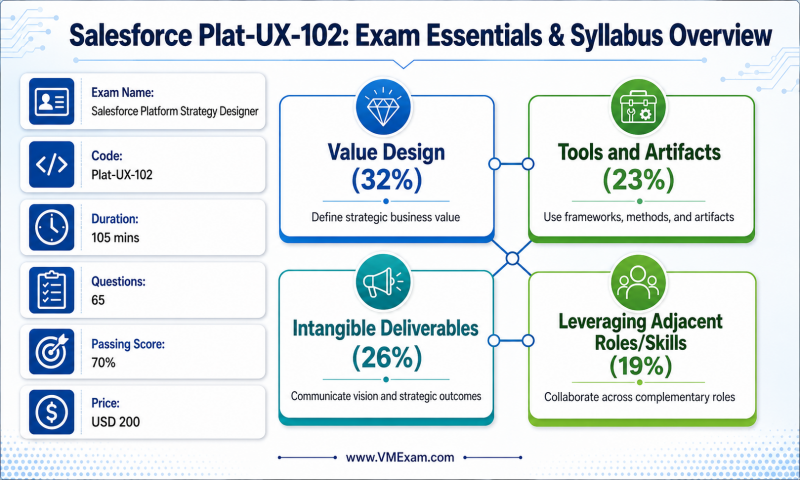 The Plat-UX-102 syllabus is meticulously designed to cover the breadth of knowledge required for effective platform strategy. Success in this certification hinges on a deep understanding of each domain and their interconnections, rather than isolated concepts. Each section carries a specific weight, emphasizing critical areas of the strategy designer's role.
-
Value Design - 32%: This domain focuses on the ability to define and articulate business value, translating organizational goals into measurable outcomes for platform solutions. It involves understanding stakeholder needs, identifying key performance indicators, and ensuring that design decisions directly contribute to strategic objectives.
-
Tools and Artifacts - 23%: Candidates must demonstrate proficiency in utilizing various design tools, frameworks, and documentation artifacts. This includes journey maps, personas, prototypes, and other methods for visualizing and communicating strategic platform designs. These tools are essential for transforming abstract ideas into concrete, communicable plans.
-
Intangible Deliverables - 26%: This section addresses the less tangible yet critical aspects of platform success, such as user adoption, change management, governance, and overall user experience. It emphasizes the importance of designing for human behavior and organizational readiness, ensuring that platform solutions are not just functional but also embraced and effectively utilized.
-
Leveraging Adjacent Roles/Skills - 19%: The strategy designer rarely works in isolation. This domain assesses the ability to collaborate effectively with diverse teams, including technical architects, business analysts, project managers, and end-users. It involves understanding their perspectives, aligning efforts, and integrating their expertise to build holistic and successful strategies.
A thorough grounding in these domains, as outlined on the Salesforce Platform Strategy Designer official page, is fundamental for anyone aspiring to excel in the Plat-UX-102 examination and, more importantly, in a real-world strategic design role.
Architecting for Longevity: Foresight in Platform Strategy
The essence of the Salesforce Platform Strategy Designer role lies in its forward-thinking approach. It's not enough to build solutions that meet today's needs; the true challenge is to design for tomorrow's unknown demands. This requires a profound ability to anticipate market shifts, technological advancements, and evolving user expectations. Foresight in platform strategy means building adaptable and resilient systems that can evolve without constant, costly overhauls.
A certified strategy designer thinks several steps ahead, considering the long-term impact of architectural decisions on scalability, maintainability, and future innovation. This preventative mindset helps organizations avoid technical debt and ensures their Salesforce investment continues to deliver value years down the line. It involves critical analysis of potential risks, understanding industry trends, and advocating for design choices that support sustained growth.
Realizing Business Value: Mastering Plat-UX-102 Principles
At the core of the Plat-UX-102 certification is the ability to connect design decisions directly to tangible business value. This involves a rigorous process of defining success metrics upfront, establishing clear objectives, and continuously measuring the impact of implemented solutions. Professionals in this role act as critical bridges between strategic business goals and the technical execution on the Salesforce platform.
Mastering these principles means understanding how to prioritize features based on potential ROI, how to optimize processes for efficiency gains, and how to quantify the benefits of improved user experiences. It requires a blend of business acumen, analytical skills, and a deep understanding of the Salesforce ecosystem to ensure that every strategic choice amplifies organizational value and contributes to a competitive advantage.
From Vision to Reality: Utilizing Design Tools Effectively
Translating abstract strategies into concrete, actionable plans is a critical skill validated by Plat-UX-102. This requires proficiency in a range of design tools and artifacts that help visualize, communicate, and refine platform solutions. These tools serve as common language across diverse teams, ensuring alignment and shared understanding throughout the development lifecycle.
Employing Visual Methodologies
Visual aids are indispensable for complex platform strategies. They include:
-
User Journey Maps: These illustrate the end-to-end experience of a user, highlighting pain points and opportunities for improvement within the Salesforce ecosystem.
-
Personas: Detailed profiles of key user segments, helping designers empathize with their needs and tailor solutions accordingly.
-
Service Blueprints: Comprehensive diagrams that depict all components of a service, both front-stage and backstage, across the Salesforce platform.
-
Prototyping Tools: For creating interactive mock-ups of proposed solutions, enabling early feedback and iterative refinement before significant development resources are committed.
Effective use of these tools accelerates decision-making, reduces ambiguity, and fosters collaborative innovation, ultimately streamlining the path from strategic vision to successful implementation.
Championing User Experience: Delivering Intangible Value
The success of any Salesforce platform strategy is inherently tied to the quality of the user experience it delivers. The Plat-UX-102 certification emphasizes the critical role of the strategy designer in championing user-centered design, ensuring that the intangible aspects of interaction, adoption, and satisfaction are prioritized alongside functional requirements. This commitment to UX directly influences user engagement, productivity, and the overall return on investment.
Delivering intangible value means designing intuitive interfaces, streamlining workflows, and implementing robust change management strategies that minimize friction during transitions. It involves understanding user psychology and behavior, fostering trust, and creating an environment where users naturally embrace and leverage the platform's full capabilities. A strong focus on user experience transforms a merely functional system into an indispensable tool for employees and customers alike.
Collaborative Design: Integrating Adjacent Expertise for Success
No successful platform strategy is conceived or executed in a vacuum. The Plat-UX-102 role demands exceptional collaborative skills, requiring the strategy designer to seamlessly integrate insights and expertise from various adjacent roles. This interdisciplinary approach ensures that platform solutions are not only technically sound but also strategically aligned with business objectives, user needs, and operational realities.
Fostering Cross-Functional Partnerships
Effective collaboration involves:
-
Technical Architects: Working closely to ensure proposed designs are technically feasible, scalable, and secure within the Salesforce architecture.
-
Business Analysts: Translating business requirements into detailed specifications, ensuring the platform strategy addresses core organizational challenges.
-
Project Managers: Aligning strategic goals with project timelines and resources, facilitating smooth execution and delivery.
-
User Researchers and UI/UX Designers: Incorporating deep user insights and best practices for interface design to enhance adoption and satisfaction.
-
Change Management Specialists: Partnering to develop strategies that prepare users for new systems and processes, ensuring a smooth transition and high adoption rates.
By effectively leveraging these diverse skill sets, the strategy designer can craft holistic solutions that resonate across the entire organization, driving greater impact and fostering a culture of innovation.
Driving Digital Transformation: The Plat-UX-102 Impact
The Salesforce Platform Strategy Designer plays a pivotal role in driving genuine digital transformation within an organization. This certification empowers professionals to guide companies beyond simply digitizing existing processes, encouraging them instead to reimagine how business is done through the intelligent application of the Salesforce platform. The impact extends to reshaping customer experiences, optimizing operational efficiency, and fostering new business models.
A certified Plat-UX-102 professional can identify opportunities for disruptive innovation, strategically phased implementations, and the integration of emerging technologies. They are key in translating high-level corporate objectives into actionable, platform-specific strategies that yield measurable improvements and a sustained competitive edge. This strategic leadership is essential for organizations navigating the complexities of an increasingly digital-first world.
Cultivating a Strategic Mindset: Preparation Beyond Memorization
Preparing for the Plat-UX-102 exam extends far beyond rote memorization of concepts. It demands the cultivation of a strategic mindset, enabling candidates to analyze complex scenarios, synthesize information from various domains, and formulate comprehensive solutions. This exam tests not just what you know, but how you think and apply that knowledge to real-world strategic challenges.
Candidates should focus on understanding the "why" behind each principle and methodology, practicing critical thinking, and developing the ability to articulate strategic justifications for design choices. Engaging with case studies, participating in design thinking workshops, and critically evaluating existing Salesforce implementations can significantly enhance this strategic acumen. This approach ensures readiness for both the exam and the demanding responsibilities of a Platform Strategy Designer.
To further bolster practical understanding, exploring additional resources, such as Salesforce Plat-UX-102 practice questions, can provide valuable insights into the types of scenarios and questions presented on the actual exam. These resources offer a realistic preview and help identify areas needing further attention.
Benefits of Validation: Elevating Your Platform Career
Earning the Salesforce Platform Strategy Designer certification, Plat-UX-102, offers significant advantages for professionals aiming to elevate their careers in the Salesforce ecosystem. This credential serves as a powerful validation of one's ability to operate at a strategic level, distinguishing individuals who can bridge the gap between business vision and technical execution.
The benefits extend beyond mere resume enhancement:
-
Enhanced Credibility: It signals to employers and clients a proven capability in strategic platform design and foresight.
-
Career Advancement: Opens doors to senior roles such as Lead Solution Architect, Enterprise Architect, or Digital Transformation Consultant.
-
Increased Earning Potential: Certified professionals often command higher salaries due to their specialized and high-demand skills.
-
Strategic Influence: Empowers individuals to lead crucial conversations about platform direction, influencing key business decisions.
-
Broader Impact: Enables professionals to contribute to more impactful projects, driving significant organizational change and innovation.
This certification is an investment in professional growth, equipping individuals with the skills and recognition needed to thrive in the evolving landscape of platform strategy.
Crafting a Winning Study Plan for Plat-UX-102
A structured and disciplined study plan is paramount for success in the Plat-UX-102 exam. Given the strategic nature of the content, a well-thought-out approach that combines theoretical knowledge with practical application is essential. Effective preparation focuses on mastering each syllabus domain, understanding the interdependencies, and honing problem-solving skills.
Key Components of an Effective Study Plan
-
Thorough Syllabus Review: Begin by meticulously going through each topic area in the official syllabus. Understand the weightage of each domain to allocate study time proportionally.
-
Official Documentation and Trailhead: Salesforce's Trailhead platform offers comprehensive learning modules relevant to platform strategy and design. These modules provide foundational knowledge and practical scenarios.
-
Real-World Application: Apply concepts to hypothetical or actual business cases. Practice designing solutions, articulating value propositions, and justifying architectural decisions.
-
Practice Exams and Sample Questions: Utilize reliable practice tests to familiarize yourself with the exam format, question types, and time constraints. This helps identify weak areas for targeted study.
-
Study Groups and Community Engagement: Discuss concepts with peers, share insights, and learn from different perspectives. Engaging with the Salesforce Ohana can provide valuable context and tips.
-
Time Management: Allocate dedicated study slots and adhere to a schedule. Ensure sufficient time for review and mock exams to build confidence.
Adopting this structured approach ensures a comprehensive understanding of the material, not just for passing the exam, but for genuinely excelling in the role of a Platform Strategy Designer.
Navigating Complex Scenarios: Insights for Exam Success
The Plat-UX-102 exam often presents candidates with complex, multi-faceted scenarios that require more than surface-level knowledge. Success hinges on the ability to dissect these scenarios, identify the core strategic challenge, and apply appropriate design principles to arrive at the most effective solution. This demands strong analytical skills and a nuanced understanding of trade-offs.
When encountering scenario-based questions, candidates should:
-
Deconstruct the Problem: Break down the scenario into its essential components: business objectives, user needs, technical constraints, and organizational context.
-
Identify Key Stakeholders: Determine who is impacted by the solution and whose input is critical for success. This often influences the optimal strategy.
-
Evaluate Solution Options: Consider various strategic approaches and weigh their pros and cons against the defined business value and long-term implications.
-
Prioritize Impact: Focus on solutions that deliver the highest value while managing risks and dependencies.
-
Justify Decisions: Be prepared to articulate the rationale behind your chosen strategy, demonstrating an understanding of platform governance, scalability, and user adoption.
By systematically approaching these complex challenges, candidates can demonstrate the strategic acumen required by the Plat-UX-102 certification.
Sustaining Your Edge: Continuous Growth Post-Certification
Earning the Plat-UX-102 certification marks a significant milestone, but the journey of a Salesforce Platform Strategy Designer is one of continuous learning and adaptation. The Salesforce ecosystem, along with broader industry trends, evolves rapidly, necessitating ongoing professional development to maintain relevance and expertise. Sustaining your edge means actively engaging with new technologies, methodologies, and market dynamics.
Pathways for Ongoing Development
-
Stay Current with Salesforce Releases: Salesforce introduces three major releases annually. Understanding new features, capabilities, and best practices is crucial for strategy designers.
-
Engage in Community Forums: Active participation in Salesforce communities, user groups, and events provides opportunities to share knowledge and learn from peers.
-
Pursue Advanced Credentials: Consider complementary certifications in areas like Data Architecture, Application Architecture, or specific cloud specializations to broaden your strategic scope.
-
Read Industry Publications: Stay informed about emerging trends in digital transformation, experience design, and enterprise architecture.
-
Apply Learnings: Seek out opportunities to apply new knowledge in projects, continually refining your strategic design skills.
This commitment to continuous growth ensures that certified professionals remain at the forefront of platform innovation, delivering lasting value to their organizations.
The Salesforce Platform Strategy Designer certification, Plat-UX-102, is more than just a credential; it's a testament to a professional's capacity for strategic foresight in the dynamic world of digital platforms. It equips individuals to not just build, but to thoughtfully design and guide the evolution of Salesforce solutions, ensuring they deliver enduring business value and exceptional user experiences. By validating expertise in value design, effective tool utilization, intangible deliverables, and cross-functional collaboration, Plat-UX-102 empowers architects and strategists to lead impactful transformations.
Investing in this certification signifies a commitment to mastering the art of platform strategy, positioning professionals as indispensable drivers of innovation and long-term success. As organizations increasingly rely on strategic planning to maximize their technology investments, the demand for certified Platform Strategy Designers will only continue to grow. Embark on this journey to solidify your strategic influence and shape the future of digital solutions. For comprehensive guides and resources to support your preparation, including further details on the Plat-UX-102 exam, explore various certification readiness options.
FAQs
1. What is the Salesforce Plat-UX-102 certification?
The Salesforce Plat-UX-102, or Salesforce Platform Strategy Designer certification, validates an individual's ability to design human-centered, value-driven solutions on the Salesforce Platform, aligning business objectives with technical feasibility and user experience for long-term strategic impact.
2. Who should pursue the Plat-UX-102 exam?
The Plat-UX-102 exam is ideal for experienced Salesforce architects, consultants, and strategists who are responsible for designing comprehensive platform solutions, driving digital transformation, and ensuring that Salesforce investments yield maximum strategic value for their organizations.
3. What are the main domains covered in the Plat-UX-102 syllabus?
The Plat-UX-102 syllabus covers four main domains: Value Design (32%), Tools and Artifacts (23%), Intangible Deliverables (26%), and Leveraging Adjacent Roles/Skills (19%). These areas collectively assess a candidate's strategic design capabilities.
4. How can I effectively prepare for the Salesforce Platform Strategy Designer exam?
Effective preparation for Plat-UX-102 involves reviewing the official syllabus, utilizing Salesforce Trailhead modules, practicing with scenario-based questions, engaging in study groups, and applying design thinking principles to real-world business cases to cultivate a strategic mindset beyond memorization.
5. What career benefits does the Plat-UX-102 credential offer?
The Plat-UX-102 credential enhances professional credibility, opens doors to advanced strategic roles, increases earning potential, and provides greater influence in guiding an organization's digital transformation journey by validating high-level platform strategy and design expertise.
- Salesforce Designer Certification |
- Plat-UX-102 Platform Strategy Designer |
- Plat-UX-102 Mock Test |
- Plat-UX-102 Practice Exam |
- Plat-UX-102 Prep Guide |
- Plat-UX-102 Questions |
- Plat-UX-102 Simulation Questions |
- Plat-UX-102 |
- Salesforce Certified Platform Strategy Designer Questions and Answers |
- Platform Strategy Designer Online Test |
- Platform Strategy Designer Mock Test |
- Salesforce Plat-UX-102 Study Guide |
- Salesforce Platform Strategy Designer Exam Questions |
- Salesforce Platform Strategy Designer Cert Guide |
- Platform Strategy Designer Certification Mock Test |
- Platform Strategy Designer Simulator |
- Platform Strategy Designer Mock Exam |
- Salesforce Platform Strategy Designer Questions |
- Platform Strategy Designer |
- Salesforce Platform Strategy Designer Practice Test |
- Plat-UX-102 Exam Cost |
- Plat-UX-102 Passing Score |
- Plat-UX-102 Syllabus |
- Platform Strategy Designer Exam Books |
- Salesforce Certified Platform Strategy Designer |
- Platform Strategy Designer Certification Syllabus |
- Platform Strategy Designer Exam Prep Guide


