
Mastering Snowflake SEA-C01: A High-Score Strategy
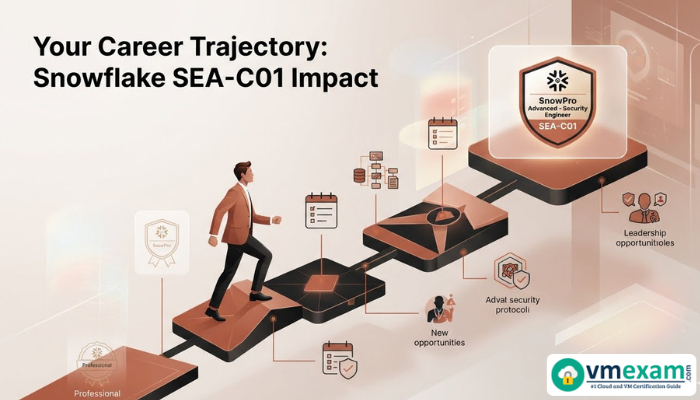
The Snowflake SnowPro Advanced - Security Engineer certification, denoted by the SEA-C01 exam, validates a candidate’s expertise in implementing and maintaining security measures within the Snowflake Data Cloud platform. This credential signifies a professional's ability to design, implement, and manage secure data solutions, covering essential areas like access control, data protection, and incident response. Professionals who aim to fortify their organization's data infrastructure against evolving threats, those in security engineering roles, or data architects with a strong security focus should pursue this advanced certification. This comprehensive article outlines a strategic, three-step approach designed to help aspiring security engineers achieve a score of 750 + Scaled Scoring from 0 - 1000 or higher on the Snowflake SEA-C01 exam, ensuring a robust understanding of the subject matter and practical application skills.
Understanding the SEA-C01 Examination Framework
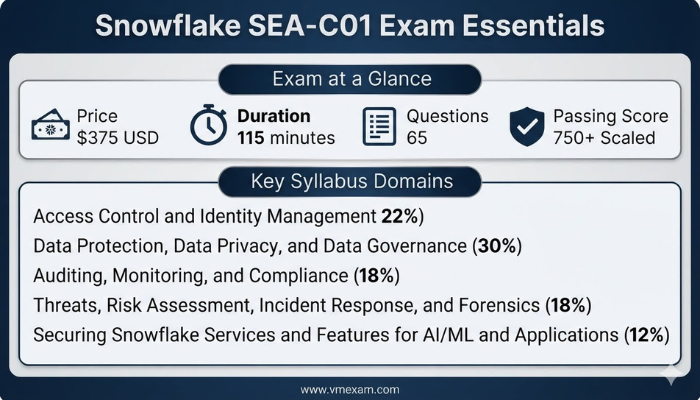
Achieving the SnowPro Advanced - Security Engineer certification demands a thorough understanding of the exam's structure and the specific areas it assesses. The SEA-C01 exam, titled Snowflake SnowPro Advanced - Security Engineer, is designed to evaluate a candidate’s advanced security capabilities within the Snowflake ecosystem. Understanding these fundamental details forms the bedrock of an effective study plan.
The key specifics of the SEA-C01 exam include:
-
Exam Name: Snowflake SnowPro Advanced - Security Engineer
-
Exam Code: SEA-C01
-
Exam Price: $375 USD
-
Duration: 115 minutes to complete the assessment
-
Number of Questions: The exam comprises 65 questions
-
Passing Score: Candidates need to achieve 750 or higher, with scoring scaled from 0 to 1000
These parameters highlight the need for both breadth and depth in preparation, ensuring candidates are well-versed in the practical application of security principles within Snowflake.
Essential Competencies: SEA-C01 Syllabus Breakdown
The Snowflake SEA-C01 exam covers a broad range of critical security domains, each with a specific weightage that indicates its importance on the exam. A structured approach to studying these areas is crucial for success. Each domain focuses on a distinct aspect of securing data and operations within the Snowflake platform.
The core syllabus topics and their respective weightages are:
|
Syllabus Topic |
Weightage |
Focus Area |
|---|---|---|
|
Access Control and Identity Management |
22% |
This section delves into managing user authentication, authorization, roles, and privileges to ensure secure access to Snowflake resources. |
|
Data Protection, Data Privacy, and Data Governance |
30% |
The largest section, focusing on encryption, data masking, tokenization, and compliance with data privacy regulations like GDPR and CCPA within Snowflake. |
|
Auditing, Monitoring, and Compliance |
18% |
Encompasses the skills needed to track activities, monitor security events, implement logging, and ensure regulatory compliance within the Snowflake environment. |
|
Threats, Risk Assessment, Incident Response, and Forensics |
18% |
This domain tests your ability to identify potential threats, assess risks, develop incident response plans, and perform forensic analysis in a Snowflake context. |
|
Securing Snowflake Services and Features for AI/ML and Applications |
12% |
Focuses on the security considerations and best practices when integrating Snowflake with AI/ML workloads and external applications, including external network access policies. You can explore more about external network access by visiting the official documentation on creating and using external network access. |
Understanding these percentages helps prioritize study efforts, ensuring more time is allocated to high-weightage topics.
Strategic Preparation: Your 3-Step Blueprint to a High Score
To achieve a score of 750 + Scaled Scoring from 0 - 1000 or higher on the Snowflake SEA-C01 exam, a structured and disciplined preparation strategy is indispensable. This three-step blueprint guides you through the process, from foundational knowledge acquisition to practical application and final assessment.
Step 1: Mastering Foundational Knowledge and Official Resources
The initial phase of your preparation should concentrate on building a strong conceptual foundation. This involves immersing yourself in Snowflake’s official documentation and leveraging their recommended study materials. The depth of knowledge required for the SEA-C01 extends beyond basic usage, necessitating a detailed understanding of security features and their configurations.
Key activities for this step include:
-
Deep Dive into Official Documentation: The Snowflake documentation is your primary source of truth. Focus on sections related to security, access control, network policies, data encryption, auditing, and compliance. Pay close attention to configuration details, best practices, and use cases.
-
Reviewing the Official Study Guide: Snowflake provides an official study guide for the SnowPro Advanced - Security Engineer certification, which acts as a roadmap to the exam objectives. You can find comprehensive details and resources on the official Snowflake certification page. This guide often highlights key concepts and areas of focus, making it invaluable for initial planning.
-
Understanding Security Architecture: Familiarize yourself with how Snowflake’s security model integrates with its cloud-agnostic architecture. This includes understanding the Shared Responsibility Model and how security controls are applied at different layers.
-
Grasping Core Security Concepts: Beyond Snowflake-specific features, reinforce your understanding of general security principles like Identity and Access Management (IAM), data lifecycle security, threat modeling, and incident response frameworks.
This foundational stage ensures you have the necessary theoretical background before moving into practical implementation.
Step 2: Practical Application and Hands-On Experience
Theoretical knowledge alone is often insufficient for a high score. The SEA-C01 exam heavily emphasizes practical application, requiring candidates to demonstrate an understanding of how security features are implemented and managed in real-world scenarios. Hands-on experience is critical to solidify your understanding.
Recommended activities for practical application:
-
Setting Up a Snowflake Trial Account: Utilize a free trial account to experiment with various security features. Create users, roles, and custom access policies. Implement data masking, external tokenization, and row access policies.
-
Simulating Security Scenarios: Practice configuring network policies, private connectivity options (like AWS PrivateLink or Azure Private Link), and federated authentication with identity providers. Explore how external network access policies function with different integrations. Further examples of external network access can be found in the Snowflake documentation examples.
-
Working with Audit Logs and Monitoring: Practice querying access history, login history, and other security-related views in Snowflake. Understand how to identify suspicious activities and configure alerts.
-
Implementing Data Governance: Apply tags, policies, and resource monitors to enforce data governance standards. Understand how to classify sensitive data and manage its lifecycle securely.
This hands-on phase will bridge the gap between theoretical knowledge and practical competence, which is essential for tackling scenario-based questions on the exam.
Step 3: Assessment and Refinement Through Practice
The final step focuses on evaluating your readiness and refining your knowledge through practice questions and mock exams. This helps identify weak areas and familiarizes you with the exam format and time constraints. This rigorous assessment is what separates a passing score from an exceptional one.
Essential components of this step include:
-
Utilizing Practice Questions: Engage with high-quality practice questions that mimic the difficulty and style of the actual SEA-C01 exam. These questions should cover all syllabus domains, helping you pinpoint areas where further study is needed.
-
Taking Full-Length Practice Tests: Simulate the actual exam experience by taking timed, full-length practice tests. This helps in managing time effectively, reducing exam anxiety, and building endurance for the 115-minute duration. Analyzing your performance on these tests is crucial for improvement.
-
Reviewing Incorrect Answers Thoroughly: Don't just note down wrong answers; understand why they were incorrect. Refer back to the official documentation for clarification. This iterative process of testing and reviewing reinforces learning and corrects misconceptions. For reliable practice questions that offer detailed explanations and a realistic exam experience, consider resources like VMExam's Snowflake SEA-C01 practice exam.
-
Creating a Study Schedule for Weak Areas: Based on your practice test results, develop a targeted study plan for topics where you scored low. Allocate dedicated time for reviewing these specific concepts and re-doing related exercises.
This final phase is about strategic refinement, ensuring you approach the SEA-C01 with confidence and a clear understanding of what to expect.
Why Pursue the SEA-C01 Credential?
Obtaining the Snowflake SnowPro Advanced - Security Engineer certification offers significant professional advantages, solidifying your expertise in a rapidly evolving cloud security landscape. This credential goes beyond merely validating technical skills; it signals a commitment to best practices and advanced capabilities in securing sensitive data in the cloud.
Benefits of achieving this certification include:
-
Enhanced Career Opportunities: The demand for skilled cloud security professionals is high. This certification opens doors to specialized roles such as Cloud Security Engineer, Data Security Architect, and Advanced Snowflake Administrator, often commanding higher salaries and greater responsibilities.
-
Demonstrated Expertise: It provides tangible proof of your ability to implement and manage robust security solutions within Snowflake, a leading cloud data platform. This official recognition sets you apart from peers.
-
Increased Organizational Trust: Employers and clients gain greater confidence in your ability to protect their valuable data assets, ensuring compliance and mitigating risks effectively.
-
Keeping Pace with Industry Standards: The certification validates that you are up-to-date with current security best practices and the latest features within the Snowflake ecosystem, which are crucial for maintaining a competitive edge.
Investing in the SEA-C01 certification is an investment in your professional future, equipping you with the credentials to excel in cloud data security.
Eligibility and Enrollment for SEA-C01
Before embarking on your preparation journey, it’s important to understand the eligibility criteria and the process for enrolling in the Snowflake SEA-C01 exam. While specific prerequisites are not always strictly enforced for registration, Snowflake generally recommends a certain level of experience to ensure candidates are adequately prepared.
Typically, candidates for the SnowPro Advanced - Security Engineer certification are expected to have:
-
Foundational SnowPro Core Certification: It is highly recommended to hold the SnowPro Core certification, as it establishes a baseline understanding of the Snowflake platform's fundamental features and architecture.
-
Practical Experience: Significant hands-on experience (typically 2+ years) with Snowflake, specifically in implementing security controls, managing access, and ensuring data protection. This includes experience with SQL, administrative tasks, and security configurations.
-
General Security Knowledge: A solid grasp of general cloud security principles, identity and access management (IAM), data governance, and compliance frameworks.
To enroll for the exam, you would typically register through Snowflake’s official certification portal or a designated testing provider. Ensure all your contact and payment details are accurate, and schedule your exam at a time that allows for thorough preparation and confidence.
Maximizing Your Study Resources
Effective preparation for the SEA-C01 exam requires more than just reading through the syllabus; it involves leveraging a diverse set of resources to deepen your understanding and refine your skills. Beyond official documentation and practice tests, several other avenues can significantly contribute to your success.
Consider incorporating these valuable resources into your study plan:
-
Snowflake Community Forums: Engaging with the Snowflake community can provide insights into common challenges, best practices, and real-world scenarios. Active participation can help clarify complex concepts and expose you to different perspectives.
-
Online Training Courses: Specialized online courses from reputable providers can offer structured learning paths, video tutorials, and labs that supplement the official documentation. These often break down complex topics into digestible modules.
-
Security Blogs and Articles: Keep up-to-date with the latest security trends, vulnerabilities, and Snowflake security updates through industry blogs and expert articles. This ensures your knowledge is current and comprehensive.
-
Whitepapers and Case Studies: Snowflake's whitepapers and customer case studies often detail advanced implementations and security considerations, providing practical context for theoretical knowledge.
A multi-faceted approach to resource utilization ensures a well-rounded preparation, equipping you with both theoretical depth and practical insight.
Navigating Exam Day
The day of your Snowflake SEA-C01 exam can be stressful, but effective preparation extends to understanding how to navigate the testing environment and manage your time strategically. Being well-prepared for the exam logistics can significantly reduce anxiety and allow you to focus purely on the questions.
Here are some key tips for exam day:
-
Arrive Early: If taking the exam in person, arrive at the test center well in advance to complete check-in procedures without rush. For online proctored exams, ensure your environment and equipment are set up and tested long before your scheduled start time.
-
Read Each Question Carefully: Many questions may contain subtle nuances or require specific interpretations. Take your time to fully understand what is being asked before attempting to answer.
-
Manage Your Time: With 65 questions in 115 minutes, you have roughly 1 minute and 46 seconds per question. Pace yourself. If you get stuck on a question, mark it for review and move on. Don't spend too much time on a single question.
-
Review All Answers: If you finish early, use the remaining time to review all your answers, especially those you marked for later. Double-check for any missed details or careless mistakes.
-
Stay Calm: Take deep breaths if you feel overwhelmed. A clear mind is essential for critical thinking and problem-solving during the exam.
These strategies will help you optimize your performance and maintain focus throughout the examination process.
Career Advancement with SnowPro Advanced - Security Engineer
The SnowPro Advanced - Security Engineer certification significantly enhances a professional's career trajectory, positioning them as a highly skilled and specialized expert in Snowflake security. This credential is particularly valuable for individuals aspiring to roles that demand a deep understanding of data protection and compliance in cloud environments.
Professionals holding the SEA-C01 certification are well-suited for roles such as:
-
Senior Cloud Security Engineer: Responsible for designing, implementing, and monitoring security measures for cloud platforms, with a specific focus on Snowflake.
-
Data Security Architect: Tasked with developing and maintaining the overall data security strategy, including access controls, encryption, and governance policies within Snowflake and integrated systems.
-
Snowflake Security Consultant: Providing expert advice and implementation services to organizations looking to secure their data warehousing solutions on Snowflake.
-
Compliance and Risk Analyst: Focusing on ensuring Snowflake environments adhere to regulatory requirements (e.g., GDPR, HIPAA, CCPA) and managing security risks.
This certification demonstrates a high level of proficiency that is increasingly critical for organizations leveraging Snowflake for their data analytics and AI/ML initiatives, ensuring data integrity and confidentiality are upheld.
Achieving a 750 + Scaled Scoring from 0 - 1000 score on the Snowflake SEA-C01 exam is an ambitious yet entirely attainable goal with a well-structured approach. By dedicating yourself to mastering foundational knowledge, gaining extensive hands-on experience, and diligently assessing your progress through practice, you will not only pass the exam but also cultivate the expertise necessary to excel as a security engineer in the Snowflake ecosystem. This certification signifies a deep understanding of securing data and operations in the cloud, a skill set that is in high demand across industries.
The journey to certification is a testament to your commitment to advanced data security. Equip yourself with the knowledge and practical skills that this rigorous exam demands. Begin your detailed preparation today and secure your expertise in safeguarding critical data assets within the Snowflake Data Cloud. For comprehensive study materials and practice exams, explore trusted resources that align with official Snowflake curriculum to enhance your preparation further.
FAQs
1. What is the main purpose of the Snowflake SnowPro Advanced - Security Engineer (SEA-C01) certification?
The Snowflake SnowPro Advanced - Security Engineer (SEA-C01) certification validates a professional's advanced skills in implementing and managing security controls, data protection, and compliance within the Snowflake Data Cloud platform.
2. Are there any prerequisites for taking the SEA-C01 exam?
While there are no strict enforced prerequisites to register, it is highly recommended that candidates hold the SnowPro Core certification and possess at least two years of hands-on experience with Snowflake security features and general cloud security principles.
3. How should I prioritize study areas for the SEA-C01 exam given the syllabus weightage?
Focus more heavily on "Data Protection, Data Privacy, and Data Governance" (30%), followed by "Access Control and Identity Management" (22%), "Auditing, Monitoring, and Compliance" (18%), and "Threats, Risk Assessment, Incident Response, and Forensics" (18%). Allocate remaining time to "Securing Snowflake Services and Features for AI/ML and Applications" (12%).
4. What kind of job roles can I pursue after achieving the Snowflake SnowPro Advanced - Security Engineer certification?
This certification prepares you for specialized roles such as Senior Cloud Security Engineer, Data Security Architect, Snowflake Security Consultant, or Compliance and Risk Analyst, focusing on securing data in the Snowflake environment.
5. Is hands-on experience crucial for passing the SEA-C01 exam?
Yes, hands-on experience is critical. The exam assesses practical application of security features, so working with a Snowflake trial account to configure policies, manage access, and simulate security scenarios is highly recommended for success.
- Snowflake Advance Certification |
- SEA-C01 SnowPro Advanced - Security Engineer |
- SEA-C01 Mock Test |
- SEA-C01 Practice Exam |
- SEA-C01 Prep Guide |
- SEA-C01 Questions |
- SEA-C01 Simulation Questions |
- SEA-C01 |
- Snowflake Certified SnowPro Advanced - Security Engineer Questions and Answers |
- SnowPro Advanced - Security Engineer Online Test |
- SnowPro Advanced - Security Engineer Mock Test |
- Snowflake SEA-C01 Study Guide |
- Snowflake SnowPro Advanced - Security Engineer Exam Questions |
- Snowflake SnowPro Advanced - Security Engineer Cert Guide |
- SnowPro Advanced - Security Engineer Certification Mock Test |
- SnowPro Advanced - Security Engineer Simulator |
- SnowPro Advanced - Security Engineer Mock Exam |
- Snowflake SnowPro Advanced - Security Engineer Questions |
- SnowPro Advanced - Security Engineer |
- Snowflake SnowPro Advanced - Security Engineer Practice Test |
- SEA-C01 Books |
- SEA-C01 Exam Cost |
- SEA-C01 Passing Score |
- SEA-C01 Syllabus |
- SnowPro Advanced - Security Engineer Exam Books


