
The Hidden Blueprint for Zscaler ZDXA Certification Success
The Zscaler Digital Experience Administrator (ZDXA) certification validates a professional's expertise in deploying, configuring, and troubleshooting Zscaler Digital Experience (ZDX) to ensure optimal user experience. This credential is designed for network, security, and IT professionals responsible for monitoring and managing user digital experience across an organization's cloud and on-premises environments. Achieving the ZDXA certification signifies a deep understanding of ZDX features, capabilities, and operational best practices, positioning individuals as key contributors to a robust digital infrastructure. This comprehensive guide outlines a strategic roadmap for preparing and passing the ZDXA exam, covering essential objectives, effective study methods, and real-world application of ZDX skills.
Understanding the ZDXA Examination Framework
Embarking on the Zscaler ZDXA certification journey requires a clear understanding of the exam's structure and administrative details. This clarity helps candidates plan their study timeline and focus on critical areas. The ZDXA exam assesses practical knowledge and theoretical concepts vital for managing Zscaler's Digital Experience Monitoring solution. Candidates are challenged to demonstrate their ability to implement and maintain ZDX effectively, which directly impacts an organization's operational efficiency and user satisfaction.
-
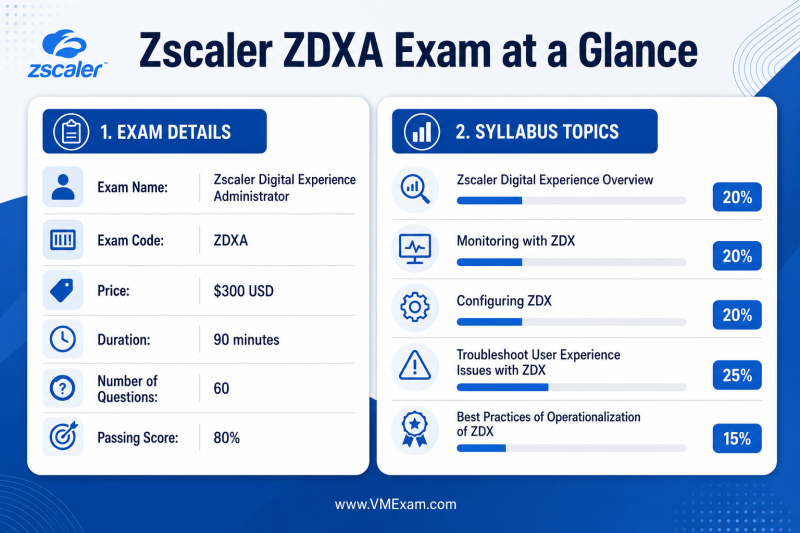
Exam Name: Zscaler Digital Experience Administrator
-
Exam Code: ZDXA
-
Exam Price: $300 USD
-
Duration: 90 minutes
-
Number of Questions: 60
-
Passing Score: 80%
These details highlight the need for focused preparation, as the 80% passing score demands a thorough grasp of all exam objectives. The 90-minute duration for 60 questions translates to roughly 1.5 minutes per question, emphasizing quick recall and confident decision-making.
Mapping Your Study Path with ZDXA Syllabus Domains
A well-defined study plan, anchored by the official ZDXA exam objectives, is crucial for success. The Zscaler ZDXA exam topics and syllabus are structured into distinct domains, each carrying a specific weightage. Understanding this distribution allows candidates to allocate study time efficiently, focusing more intensely on areas with higher percentages. These domains cover everything from foundational ZDX knowledge to advanced troubleshooting and operational strategies, ensuring a holistic understanding of the platform.
-
Zscaler Digital Experience Overview - 20%: This section covers the fundamental concepts of Zscaler Digital Experience, its architecture, and how it integrates within the Zscaler ecosystem. Understanding the core value proposition and components is essential.
-
Monitoring with ZDX - 20%: Focuses on leveraging ZDX capabilities to actively monitor user experience. This includes understanding dashboards, alerts, and various monitoring metrics to proactively identify performance issues.
-
Configuring ZDX - 20%: Details the practical steps involved in setting up and customizing ZDX for specific organizational needs. Topics here include policy configuration, deployment strategies for Zscaler Client Connector ZDX configuration, and integration with existing infrastructure.
-
Troubleshoot User Experience Issues with ZDX - 25%: This is the most heavily weighted section, emphasizing problem-solving skills. Candidates must be proficient in using ZDX tools and data to diagnose and resolve common user experience problems, which is critical for real-world Zscaler ZDX troubleshooting and administration.
-
Best Practices of Operationalization of ZDX - 15%: Covers the strategies for efficiently integrating ZDX into daily IT operations, including reporting, analytics, and workflow automation. This ensures ZDX provides continuous value and contributes to long-term digital experience management.
Each domain builds upon the previous one, forming a coherent understanding of the Zscaler ZDX platform and its application in enterprise environments.
Navigating Zscaler Digital Experience Capabilities
Achieving the Zscaler ZDXA certification requires more than just theoretical knowledge; it demands a practical grasp of Zscaler Digital Experience (ZDX) features and capabilities. ZDX, at its core, provides end-to-end visibility into user experience, encompassing network, application, and device performance. This visibility is paramount for organizations striving to maintain high productivity and reduce IT support overhead. Professionals aiming for this certification must deeply understand how ZDX collects and analyzes data to present actionable insights.
Core ZDX Features and Monitoring Principles
ZDX offers a comprehensive suite of tools for proactive monitoring and reactive troubleshooting. Key features include real-time performance monitoring, root cause analysis, and integration with the Zscaler Client Connector. An administrator must be adept at interpreting ZDX dashboards and reports to pinpoint performance bottlenecks.
-
End-to-End Visibility: ZDX provides insight into the entire digital path from the user's device to the application, whether it resides in the cloud or a private data center. This includes device health, local network conditions, ISP performance, Zscaler service edge performance, and application server responsiveness.
-
Real-time Data and Alerts: Administrators use ZDX to monitor critical metrics in real-time. The platform offers configurable alerts that notify IT teams of impending or active issues, enabling prompt intervention before user impact escalates.
-
Application and Network Health Scores: ZDX assigns health scores to applications and network segments, providing a quick visual indicator of performance. These scores help prioritize investigation efforts and gauge overall digital experience quality.
Mastering these features is fundamental to effectively utilizing ZDX for digital experience monitoring. For an in-depth look at ZDX capabilities, explore the resources available through the Zscaler ZDXA certification guide.
Elevating Your Career with ZDXA Certification
The Zscaler ZDXA certification offers substantial benefits, significantly enhancing a professional's career trajectory and marketability. In an era where digital experience directly impacts business outcomes, organizations are actively seeking specialists capable of optimizing their digital infrastructure. Holding the ZDXA credential validates a unique skill set that addresses a critical need in modern IT environments, directly contributing to the Zscaler Digital Experience Administrator roles and responsibilities.
Career Advancement and Skill Validation
Earning ZDXA demonstrates a specialized competence in a rapidly evolving domain. This expertise is highly valued, translating into better job opportunities and professional recognition.
-
Enhanced Job Prospects: The certification opens doors to specialized roles in network operations, cybersecurity, and digital experience management, where ZDX expertise is a key requirement.
-
Increased Earning Potential: Professionals with in-demand certifications like ZDXA often command higher salaries. Zscaler Digital Experience Administrator salary expectations typically reflect the critical nature of ensuring seamless digital interactions for employees and customers.
-
Industry Recognition: Being ZDXA certified establishes you as a recognized expert in Zscaler's innovative Digital Experience Monitoring solution, distinguishing you in a competitive job market.
This certification is not just about technical skills; it's about strategic value, positioning you as a crucial asset in any organization's digital transformation journey.
Formulating an Effective ZDXA Preparation Strategy
Success in the Zscaler ZDXA certification exam hinges on a well-structured and disciplined preparation strategy. This involves not only understanding the syllabus but also leveraging appropriate study resources and adopting effective learning techniques. A strategic approach ensures comprehensive coverage of Zscaler ZDXA exam objectives and builds the confidence required to pass the challenging exam.
Leveraging Official Training and Documentation
The first step in any certification journey should always involve official vendor resources. Zscaler provides extensive documentation and training modules specifically designed to prepare candidates for the ZDXA exam.
-
Zscaler Digital Experience Administrator Training Course: Enrolling in an official Zscaler training course is highly recommended. These courses are structured to cover all exam topics in detail, often including hands-on labs that reinforce theoretical concepts.
-
Official Zscaler Documentation: The Zscaler support portal and documentation library are invaluable resources. Dive deep into ZDX administration guides, deployment best practices, and troubleshooting manuals. Pay particular attention to the Zscaler ZDXA exam blueprint, which outlines specific areas of focus. You can find detailed information directly from the official Zscaler Academy page.
-
Community Forums and Knowledge Bases: Engaging with the Zscaler community can provide practical insights and clarify complex topics. Real-world scenarios discussed in forums can often highlight areas that are frequently tested.
Beyond official sources, creating a personalized Zscaler ZDXA study guide that consolidates notes, key concepts, and complex configurations will serve as a potent tool for review.
Adopting Smart Study Techniques
Effective learning goes beyond merely reading material. Active engagement with the content is key to retaining information and applying it under exam conditions.
-
Hands-on Practice: Wherever possible, gain practical experience with Zscaler ZDX. Configuring policies, monitoring dashboards, and simulating troubleshooting scenarios in a lab environment solidify understanding and build muscle memory.
-
Concept Mapping and Flashcards: Break down complex topics into smaller, manageable chunks. Create concept maps to visualize relationships between different ZDX components or use flashcards for quick recall of features, commands, and definitions.
-
Regular Review and Self-Assessment: Schedule regular review sessions to reinforce learned material. Periodically test your knowledge without referring to notes to identify weak areas that require additional focus.
By combining structured learning with active study methods, candidates can build a robust foundation for ZDXA certification success.
Mastering ZDX Configuration and Troubleshooting
A significant portion of the Zscaler ZDXA certification focuses on the practical aspects of ZDX configuration and Zscaler ZDX troubleshooting and administration. This domain requires candidates to not only understand how ZDX works but also how to implement and maintain it effectively within various network environments. Proficiency in these areas is crucial for handling real-world challenges related to digital experience monitoring.
Implementing Effective ZDX Configuration
Proper configuration ensures ZDX provides accurate and relevant data, enabling proactive management of user experience. This involves understanding the various components and their interdependencies.
-
Zscaler Client Connector ZDX Configuration: The Zscaler Client Connector is central to ZDX data collection. Administrators must be proficient in configuring the client connector for ZDX functionality, including enabling appropriate modules, setting up trusted network detection, and managing policies for different user groups. This ensures comprehensive data capture from endpoints.
-
Policy and Analytics Settings: Customizing ZDX policies to monitor specific applications, user segments, or geographic locations is vital. This includes setting thresholds for alerts, defining application groups, and configuring data retention policies to align with organizational compliance and operational needs.
-
Integration with ZIA/ZPA: Understanding how ZDX integrates seamlessly with Zscaler Internet Access (ZIA) and Zscaler Private Access (ZPA) is key. This integration allows for a unified view of user experience across both internet and private application access, leveraging the existing Zscaler infrastructure.
These configurations lay the groundwork for effective digital experience monitoring.
Resolving User Experience Issues with ZDX
The ability to troubleshoot efficiently using ZDX data is a highly valued skill validated by the ZDXA exam. Candidates must demonstrate systematic problem-solving approaches.
-
Identifying Root Causes: ZDX provides granular data that helps distinguish between device, local network, ISP, cloud service, or application server-side issues. Administrators must be able to navigate ZDX dashboards and reports to quickly isolate the source of a problem.
-
Analyzing ZDX Logs and Events: Delving into detailed logs and events within ZDX is essential for deep-dive analysis. This includes understanding connection details, latency metrics, and application transaction times to identify patterns or anomalies. For a comprehensive overview of ZDX capabilities and troubleshooting best practices, refer to the official ZDXA Exam Blueprint.
-
Correlating Data Points: Effective troubleshooting involves correlating data from multiple ZDX components – client connector, Zscaler service edges, and application probes – to build a complete picture of the user's experience. This holistic view is critical for accurate diagnosis and remediation.
A strong command of both configuration and troubleshooting empowers ZDXA-certified professionals to maintain high-quality digital experiences.
Optimizing ZDX Operationalization and Reporting
Beyond initial deployment and troubleshooting, the Zscaler ZDXA certification emphasizes the best practices of operationalization of ZDX. This involves integrating ZDX into daily IT workflows, continuously monitoring performance, and leveraging its powerful reporting and analytics capabilities. Effective operationalization ensures that ZDX provides ongoing value, supports strategic decision-making, and contributes to a robust digital experience monitoring certification framework.
Integrating ZDX into IT Workflows for Efficiency
Operationalizing ZDX means making it an integral part of routine IT tasks, ensuring its insights are regularly consumed and acted upon.
-
Proactive Monitoring Routines: Establish regular checks of ZDX dashboards and health scores. Define thresholds for critical applications and user groups to trigger alerts, allowing IT teams to respond before issues impact a broad user base.
-
Cross-functional Collaboration: ZDX data is valuable for various IT teams, including network operations, security, and application support. Foster collaboration by sharing relevant ZDX insights, streamlining communication, and accelerating issue resolution across departments.
-
Automation and Orchestration: Explore opportunities to integrate ZDX with existing IT Service Management (ITSM) tools or orchestration platforms. Automating alert routing or ticket creation based on ZDX findings can significantly reduce manual effort and improve response times.
These practices transform ZDX from a monitoring tool into a strategic operational asset.
Leveraging ZDX Reporting and Analytics
The ability to extract meaningful insights from ZDX data through comprehensive reporting and analytics is a cornerstone of effective digital experience administration. Zscaler ZDX reporting and analytics capabilities empower administrators to communicate performance trends, justify infrastructure investments, and drive continuous improvement.
-
Customized Reports: ZDX allows for the creation of customized reports tailored to different stakeholders. This could include executive summaries on overall digital experience, detailed network performance reports for engineers, or application-specific reports for development teams.
-
Historical Performance Analysis: Utilize ZDX's historical data to identify long-term trends, anticipate potential performance degradations, and evaluate the impact of infrastructure changes. This historical perspective is invaluable for proactive capacity planning and optimization.
-
Benchmarking and Baseline Creation: Establish performance baselines for critical applications and network paths. ZDX reporting can then be used to benchmark current performance against these baselines, quickly highlighting deviations and areas requiring attention.
By mastering ZDX operationalization and reporting, certified professionals can ensure their organizations consistently deliver superior digital experiences.
Validating Proficiency with ZDXA Practice Exams
A crucial component of any successful certification journey, including the Zscaler ZDXA, is the diligent use of Zscaler ZDXA practice exam resources and engaging with Zscaler ZDXA sample questions. While official training provides the knowledge, practice exams simulate the actual test environment, helping candidates gauge their readiness, identify knowledge gaps, and become comfortable with the exam format. It is vital to approach practice tests as learning tools rather than just pass/fail indicators.
Importance of Realistic Practice Questions
High-quality practice exams offer several advantages, beyond simply testing knowledge recall.
-
Familiarization with Exam Structure: Practice tests help candidates understand the types of questions asked, time limits, and overall flow of the ZDXA exam. This reduces anxiety on exam day.
-
Identification of Weak Areas: By analyzing performance on practice exams, candidates can pinpoint specific syllabus topics where their understanding is weak, allowing for targeted review and study.
-
Time Management Skills: Simulating the 90-minute time constraint helps in developing effective time management strategies, ensuring all questions can be addressed within the allotted period.
When seeking practice materials, ensure they are reputable and align closely with the official exam objectives. Ethical preparation is paramount; relying on "exam dumps" can lead to a superficial understanding and undermine the value of the certification.
Leveraging Practice Resources Effectively
To maximize the benefit of practice exams, follow a structured approach:
-
Take a Baseline Test: Start with a full-length practice exam early in your study plan to assess your current knowledge level.
-
Review Explanations Thoroughly: For every question answered incorrectly (and even correctly, if unsure), meticulously review the provided explanations. Understand the "why" behind the correct answer and why other options are wrong.
-
Simulate Exam Conditions: As you get closer to the exam date, take practice tests under strict exam conditions—no notes, no interruptions, and timed. This builds stamina and focus.
For additional resources and practice opportunities, professionals often turn to platforms like VMExam, which provides comprehensive study materials and practice exams tailored to various certifications, including Zscaler ZDXA. Such platforms can be invaluable for solidifying your preparation.
Considering ZDXA Exam Prerequisites and Planning
Before committing to the Zscaler ZDXA certification exam, candidates should assess their foundational knowledge and experience against any Zscaler ZDXA exam prerequisites. While Zscaler does not typically enforce strict prerequisites for taking their associate-level exams, a recommended background ensures a higher probability of success and a smoother learning curve. Planning your certification journey carefully, including understanding the recommended foundational requirements, is a strategic move for efficient preparation.
Recommended Foundational Knowledge
While there are no hard-and-fast ZDXA prerequisites, having a background in specific areas will significantly aid your understanding of ZDX concepts and their real-world application.
-
Networking Fundamentals: A solid understanding of TCP/IP, DNS, routing, and basic network troubleshooting is highly beneficial, as ZDX heavily relies on network telemetry.
-
Cloud Security Concepts: Familiarity with cloud security principles, secure access service edge (SASE) architecture, and the role of proxy services will help contextualize ZDX within the broader Zscaler ecosystem.
-
Basic IT Administration: General experience with IT administration, including managing user devices, applications, and operating systems, provides a practical foundation for understanding user experience issues.
If any of these areas are unfamiliar, dedicating some initial study time to them can strengthen your overall preparation.
Structuring Your ZDXA Learning Trajectory
Once you have a grasp of your current knowledge level and any areas needing bolstering, structure your learning trajectory with clear milestones.
-
Establish a Timeline: Set a realistic exam date and work backward to create a study schedule. Allocate sufficient time for each syllabus domain, giving extra attention to heavily weighted or personally challenging areas.
-
Integrate Hands-on Experience: Seek opportunities to work with ZDX in a practical setting. If a live environment isn't available, explore Zscaler's demo or lab resources.
-
Schedule Regular Breaks and Reviews: Avoid burnout by incorporating breaks into your study routine. Regular review sessions, even short ones, are more effective than cramming before the exam.
A well-planned journey, acknowledging Zscaler ZDXA exam prerequisites and structuring study effectively, will significantly increase your chances of earning this valuable credential.
Advancing Your Expertise Beyond ZDXA Certification
Achieving the Zscaler Digital Experience Administrator (ZDXA) certification is a significant milestone, but it also marks the beginning of a continuous journey in digital experience monitoring and Zscaler technologies. The skills validated by ZDXA are highly applicable in the field, making ongoing engagement with the Zscaler ecosystem essential for sustained professional growth and the continuous evolution of ZDX capabilities.
Integrating ZDXA Skills in Practical Scenarios
The real value of the ZDXA certification comes from applying the acquired knowledge in daily operations. This involves actively using ZDX to solve real-world problems and contributing to an organization's digital strategy.
-
Proactive Problem Solving: Use ZDX insights to move beyond reactive troubleshooting to anticipate and prevent user experience issues, directly impacting employee productivity and satisfaction.
-
Strategic Contribution: Leverage ZDX reporting and analytics to provide data-driven recommendations for network optimization, application performance improvements, and strategic infrastructure investments.
-
Mentorship and Knowledge Sharing: Share your ZDXA expertise with colleagues, helping to elevate the overall capability of your IT team in managing digital experiences.
Active application solidifies your expertise and highlights the practical value of your certification.
The Future of Digital Experience Monitoring and Zscaler
The field of digital experience monitoring is dynamic, with continuous advancements in technologies and methodologies. Staying current with Zscaler's product updates and industry trends is crucial.
-
Continuous Learning: Regularly review Zscaler product release notes, attend webinars, and participate in industry conferences to stay informed about new ZDX features and best practices.
-
Exploring Advanced Zscaler Certifications: Consider pursuing further Zscaler certifications, such as those related to ZIA or ZPA, to broaden your expertise and gain a more comprehensive understanding of the entire Zscaler Zero Trust Exchange platform.
-
Contributing to the Community: Engage in online communities and professional networks related to digital experience and cloud security. Sharing insights and learning from peers fosters professional growth and keeps your skills sharp.
The ZDXA certification is a robust foundation, enabling professionals to thrive in the evolving landscape of digital experience management and contribute strategically to secure, high-performing digital environments.
The Zscaler Digital Experience Administrator (ZDXA) certification is more than just a credential; it's a strategic asset for any IT professional navigating the complexities of modern digital environments. By offering a clear roadmap for success, this article has outlined the critical steps, from understanding the exam structure and syllabus to mastering ZDX configuration, troubleshooting, and operational best practices. The skills gained from pursuing this certification are invaluable, validating expertise in ensuring seamless user experiences and contributing significantly to an organization's operational resilience.
As digital infrastructures continue to evolve, the demand for certified ZDX professionals will only grow. Taking the initiative to earn your ZDXA certification positions you at the forefront of this critical domain. For those ready to embark on this journey and leverage high-quality preparation tools, explore comprehensive study guides, practice exams, and additional resources designed to support your success. Start your targeted preparation today and confidently achieve your ZDXA certification goals. Visit VMExam to access a wealth of materials to help you prepare effectively.
FAQs
1. What does the Zscaler ZDXA certification validate?
The Zscaler ZDXA certification validates a professional's expertise in deploying, configuring, troubleshooting, and administering Zscaler Digital Experience (ZDX) to monitor and optimize user digital experience across an organization's network and applications.
2. Who should consider taking the Zscaler Digital Experience Administrator (ZDXA) exam?
This exam is ideal for network engineers, security administrators, IT operations staff, and any IT professional responsible for monitoring user experience, identifying performance bottlenecks, and maintaining optimal digital access to applications and resources.
3. Are there any official prerequisites for the ZDXA exam?
While there are no strict official prerequisites enforced by Zscaler, candidates are typically recommended to have a foundational understanding of networking concepts, cloud security principles, and general IT administration experience to maximize their chances of success.
4. How much does the Zscaler ZDXA certification exam cost?
The Zscaler ZDXA certification exam costs $300 USD. This fee covers the registration and attempt of the proctored examination.
5. What kind of preparation materials are most effective for the ZDXA exam?
Effective preparation materials include official Zscaler training courses, detailed Zscaler documentation, the ZDXA exam blueprint, and practice exams. Hands-on experience with the ZDX platform and active engagement with study groups are also highly beneficial.
- Zscaler Administrator Certification |
- ZDXA Digital Experience Administrator |
- ZDXA Mock Test |
- ZDXA Practice Exam |
- ZDXA Prep Guide |
- ZDXA Questions |
- ZDXA Simulation Questions |
- ZDXA |
- Zscaler Digital Experience Administrator Certification Questions and Answers |
- Digital Experience Administrator Online Test |
- Digital Experience Administrator Mock Test |
- Zscaler ZDXA Study Guide |
- Zscaler Digital Experience Administrator Exam Questions |
- Zscaler Digital Experience Administrator Cert Guide |
- Digital Experience Administrator Certification Mock Test |
- Digital Experience Administrator Mock Exam |
- Zscaler Digital Experience Administrator Questions |
- Digital Experience Administrator |
- Zscaler Digital Experience Administrator Practice Test |
- ZDXA Books |
- ZDXA Exam Cost |
- ZDXA Passing Score |
- ZDXA Syllabus |
- Digital Experience Administrator Exam Books |
- Zscaler Digital Experience Administrator Certification |
- Digital Experience Administrator Certification Syllabus |
- Digital Experience Administrator Exam Prep Guide


